Across Dhaka's tea stalls, on smartphone scrollable feeds, and at family dinner tables nationwide, a singular refrain echoes with predictable cadence: "Leaving the country is the only way out."
Faced with persistent domestic headwinds—including sticky inflation that is squeezing household budgets, job market stagnation, and concerns over personal security—the instinct to seek greener pastures abroad has transformed from an ambition into a standard reflex.
Yet, as thousands of young professionals, students, and workers pack their hopes into polished suitcases, they confront a quiet, uncomfortable truth: the global exit door is closing fast.
For a nation of over 170 million people, leaving is no longer a simple matter of ambition; it has become an intricate, exhausting bottleneck.
The harsh reality is that leaving Bangladesh has become almost as difficult as staying, raising a fundamental question about how we view our collective future.
The ordeal begins long before anyone reaches an international departure terminal. In Bangladesh, the journey abroad starts in government offices, defined by bureaucratic red tape.
Obtaining basic personal credentials—including a birth certificate, a national ID correction, utility-backed address proofs, and eventually a passport—often becomes a trial of endurance.
Simple typographical errors on a primary school certificate can initiate months of administrative hurdles.
Citizens navigate multiple desks, enduring lengthy delays and arbitrary verification steps just to secure the legal right to apply for a visa.
Before an applicant ever faces a foreign consular officer, their energy and financial resources are significantly drained by domestic administrative processes.
Even when documentation is complete, foreign embassies present steep hurdles.
Bangladeshi passport holders face exceptionally high visa rejection rates, even for routine travel or higher education.
This trust deficit has not emerged in a vacuum.
Decades of irregular migration, the widespread forgery of bank statements and educational certificates by predatory middlemen, and a tendency for individuals to overstay visitor or student visas to seek asylum have damaged the country's international standing.
International immigration authorities now scrutinize applications from Bangladesh with heightened skepticism.
As a result, ordinary students and legitimate professionals pay the price for systemic abuses.
Work visas across traditional labour destinations in the Middle East and Southeast Asia face periodic freezes, while Western nations tighten student intake quotas and financial proof requirements.
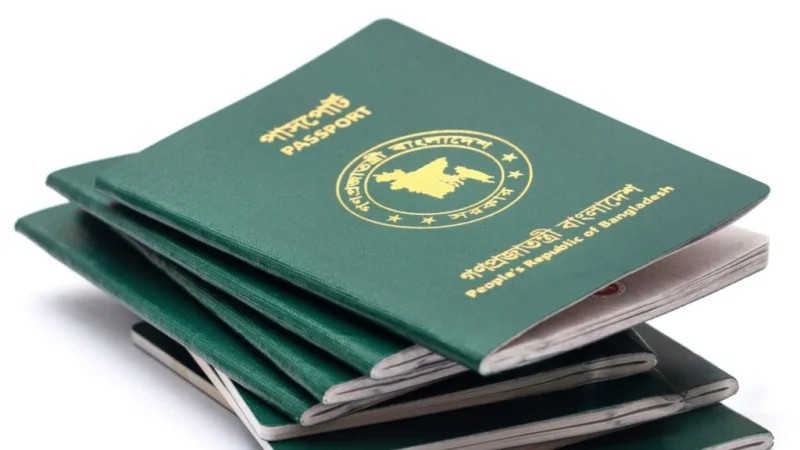
The green passport, which is frequently ranked near the bottom of global mobility indexes, reflects a serious credibility issue that limits legitimate opportunities.
Beyond administrative barriers lies a deeper structural issue: Market readiness.
Modern global labour markets demand high specialization, research literacy, fluent communication, and rapid technical adaptation.
In these areas, Bangladesh struggles with persistent gaps.
While neighbouring nations in South Asia have systematically aligned their primary, vocational, and tertiary education systems with global standards, Bangladesh’s educational framework remains fragmented.
Despite years of compulsory English education, many graduates struggle with professional fluency, creating immediate communication barriers during embassy interviews, university applications, and workplace interactions.
Furthermore, tertiary institutions in Bangladesh rarely rank at all in global university lists, leaving graduates at a disadvantage when competing against international peers.
In an era where artificial intelligence and automation are reshaping global workplaces, Bangladeshi jobseekers often lag in leveraging digital tools and AI-driven productivity workflows.
While global candidates use advanced tech stacks to secure remote work or specialized roles, many Bangladeshi applicants remain reliant on traditional skill sets that are rapidly becoming obsolete.
The friction extends beyond skills to international perceptions.
Due to publicized cases of document fraud and irregular migration routes, foreign governments have implemented stricter border policies.
Consulates that previously processed thousands of student and work permits annually have increased financial thresholds, reduced quotas, or relocated their processing centers entirely, forcing applicants to travel to neighboring countries simply to attend an interview.
This institutional skepticism makes the migration process prohibitively expensive and uncertain, turning what used to be a viable career pathway into an unpredictable gamble.
This reality creates a challenging dilemma for young Bangladeshis.
At home, economic pressures are real, as high inflation erodes purchasing power, job creation struggles to keep pace with university output, and social security challenges persist.
Yet the alternative abroad is rarely the seamless transition depicted on social media.
Immigrants frequently encounter skyrocketing costs of living, tight housing markets, strict work-hour caps for students, and the constant strain of maintaining legal status.
The realization that life abroad carries its own severe challenges can be discouraging for those who view migration as a guaranteed solution.
While these obstacles may seem daunting, recognizing them offers an important opportunity for recalibration.
The realization that leaving is not a universal solution forces a shift in focus back to building strength from within.
Bangladesh’s greatest asset remains its demographic dividend -- a young, resilient, and adaptive population.
If the path outward is restricted, the imperative shifts to building capacity domestically. This recalibration is already taking shape across several sectors:
The current mobility challenge does not signal the end of progress for Bangladesh's youth.
Rather, it marks the end of a reliance on simple exit strategies.
By redirecting its focus from escaping domestic difficulties toward cultivating competitive abilities and enhancing local infrastructure, the nation can create an environment where remaining is viewed not as a concession but as a purposeful, sustainable option.
Wafiur Rahman looks after the business desk at Dhaka Tribune.
Why it matters
The shrinking viability of international migration forces a critical re-evaluation of domestic capacity-building and educational alignment for Bangladesh's young workforce.