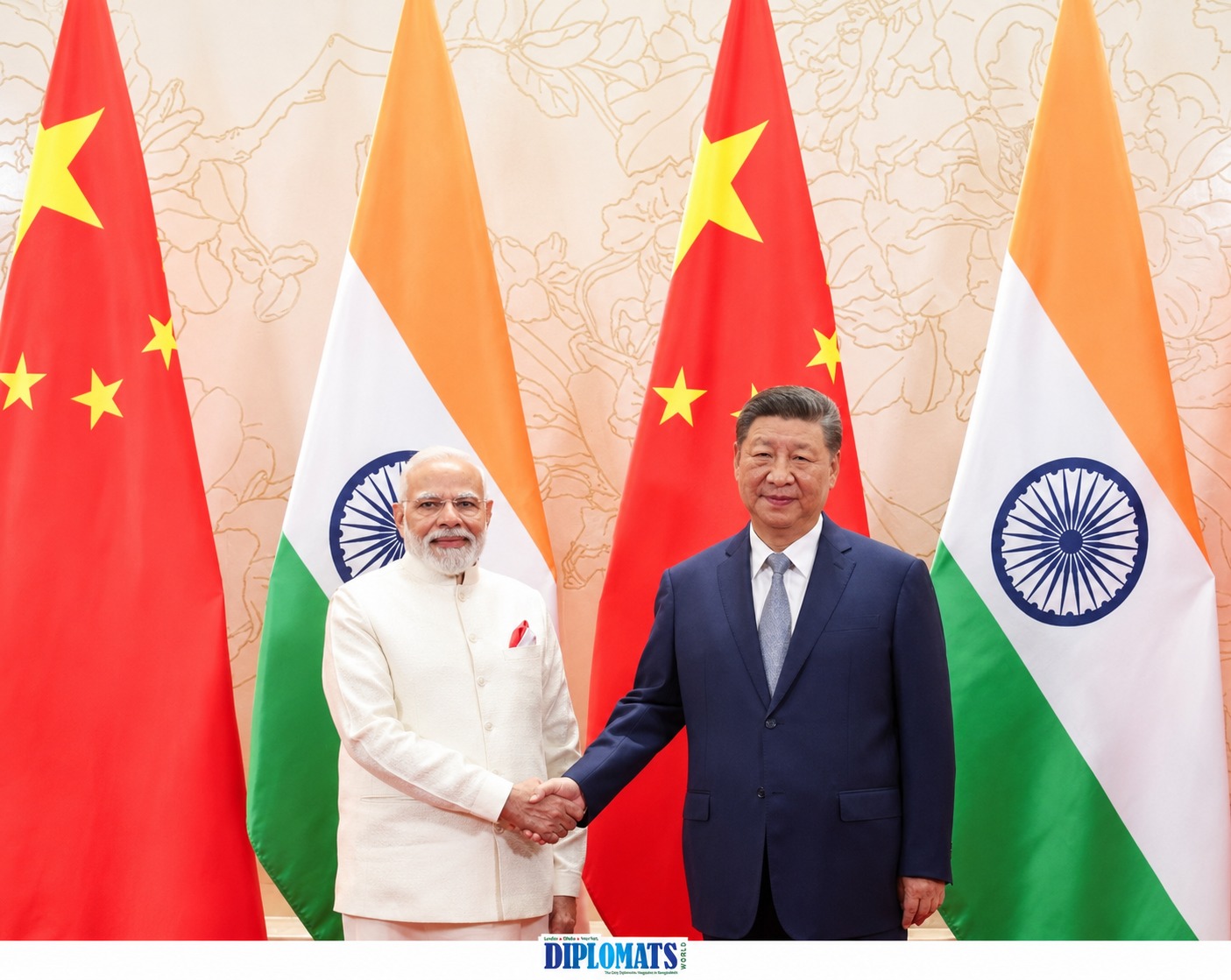
China’s latest export controls could complicate its economic rapprochement with India.
Beijing announced on Oct. 19 that it will impose export controls on strategic heavy construction and engineering equipment, including tunnel‑boring machines and walking excavators, and will tighten licensing requirements for destinations that are involved in disputes with China.
For India, whose metro and high‑speed rail projects depend on such machinery, the impact is immediate, with a delay in the delivery of machines manufactured in China by a German company.
The new regulations, which come into force on 18 November, give Beijing an additional lever to influence India’s industrial ambitions.
Three days earlier, China proposed adding 40 technologies—including advanced solar manufacturing processes—to its prohibited or restricted export lists.
These moves follow years of tightening controls on critical minerals and industrial technology.
Among the significant steps taken, the 2025 rare‑earth restrictions stand out, emerging as China’s dispute with the United States intensifies.
Magnet shortages have disrupted Indian automobile manufacturers, while producers of electronics and clean‑technology equipment have struggled to obtain the required machinery and technical expertise.
China’s regulatory arsenal, although initially developed largely for great power competition, has acquired growing significance for India’s industrial future.
China’s export controls could stymie Indian progress into higher-value manufacturing.
India's production-linked incentives (PLIs) are encouraging investment in batteries, solar energy, and advanced manufacturing.
However, advancing to more sophisticated production demands specialized machinery, engineering expertise and technical know‑how, much of which continues to be sourced from China.
Restrictions on those transfers threaten to slow India’s efforts to develop domestic capabilities.
Chinese strategic analysts have long doubted the prudence of providing technology and equipment that could enable India to emerge as an industrial competitor.
Beijing has also lodged a challenge at the World Trade Organization against Indian subsidies for batteries, electric vehicles and solar‑manufacturing.
China’s growing list of restrictions on technology exports provides Beijing with additional avenues to act on its longstanding concerns.
India remains a significant and expanding market for Chinese manufacturers, many of whom contend with intense competition at home and face trade barriers in the United States and Europe.
Bilateral trade between China and India reached a record $155.6 billion in 2025, heavily skewed toward China. Chinese exports to India totalled $135.9 billion.
Chinese machinery, components, and expertise are integral to India’s industrial expansion.
Therefore, the companies selling them have powerful reasons to keep doing business.
Some writers warn that sweeping restrictions could push Indian customers toward German, Japanese or Korean suppliers and could accelerate India’s efforts to develop domestic alternatives.
Some observers argue for a more selective policy, recommending that the United States continue supplying commercially valuable equipment to China while safeguarding the technologies and manufacturing know‑how that underpin Beijing’s industrial lead.
Should Indian purchasers be unable to rely on the availability of spare parts, upgrades and technical support, the lower‑cost Chinese machinery could become a riskier investment.
The timing is particularly uncomfortable for New Delhi.
India has relaxed approval procedures for Chinese investment in March, after maintaining restrictions since the Galwan clash of 2020. The easing applies to selected manufacturing sectors, specifically capital goods, electronic components and solar inputs.
The initiative’s stated aim was to attract investment, secure access to technology and link Indian firms with global supply chains.
New Delhi is easing access to Chinese investment just as Beijing tightens controls over technology transfers.
Even a factory financed by Chinese investors that has received Indian approval could encounter difficulties in securing the production technology it needs from China.
India may continue expanding its manufacturing base using Chinese equipment.
However, developing the engineering capacity to produce more sophisticated technologies domestically will become increasingly difficult if Beijing restricts access to the expertise required.
Beijing, of course, has a calculation of its own.
Stricter regulations may impede India’s rise as an industrial competitor, while still preserving the country’s reliance on Chinese suppliers.
Yet, excessive restrictions could eventually push Indian manufacturers to seek alternative partners, even though doing so would raise their costs.
Beijing may discover that safeguarding its present industrial advantage could come at the cost of future commercial opportunities in India.
Why it matters
New Chinese export controls on heavy machinery and advanced technologies threaten to slow India's industrial ambitions and force a reevaluation of supply chain dependencies.