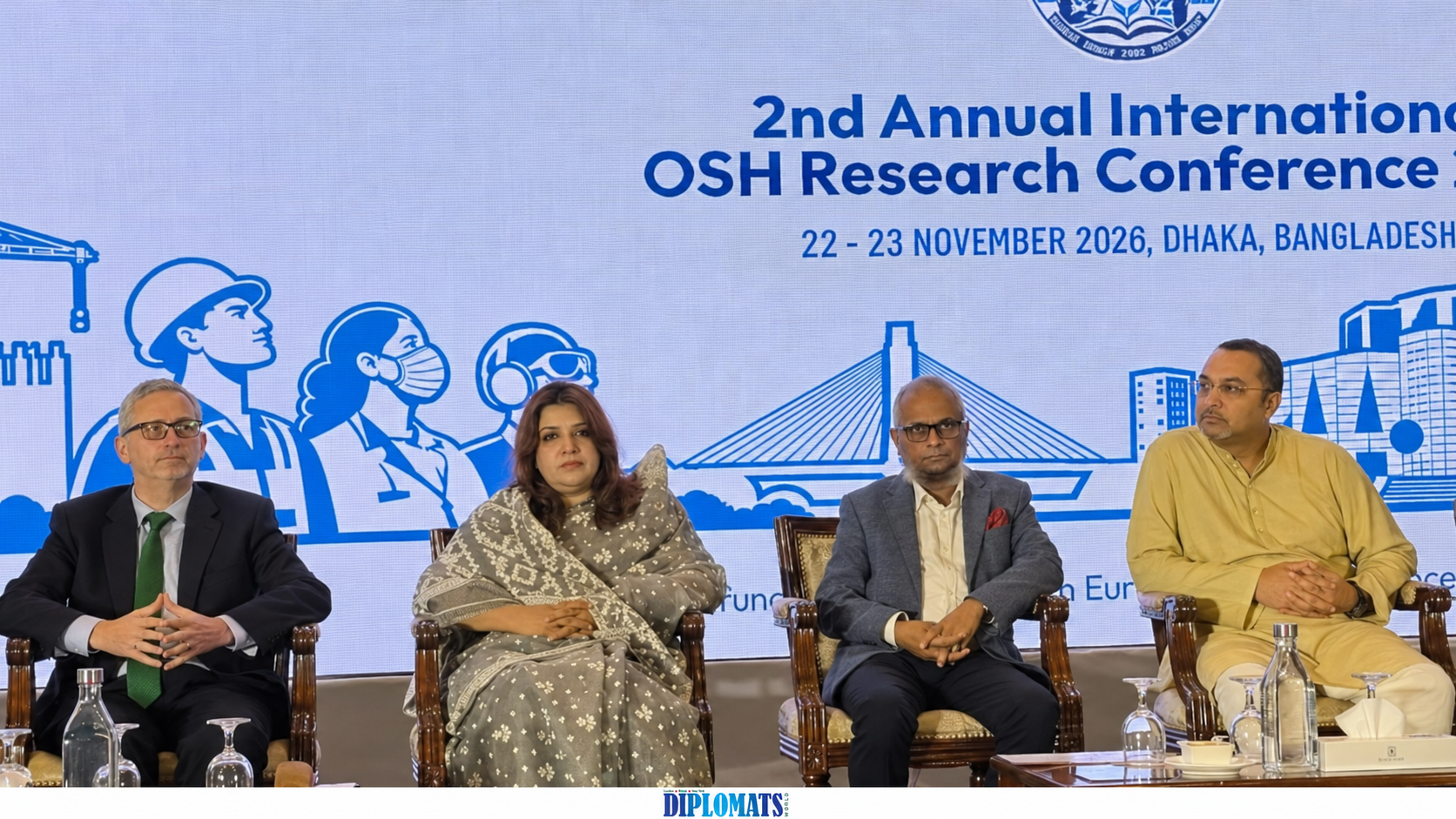
State Minister for Foreign Affairs Shama Obaed Islam has described the ongoing unrest in the country’s ready-made garment (RMG) sector as politically motivated.
She made the remarks on Sunday at a conference on occupational health and safety (OSH) in the workplace, held at the Pan Pacific Sonargaon Hotel in Dhaka.
She stated that the unrest was being fuelled on the streets with the intention of harming the country’s economy, future and garment industry.
Shama Obaed stated that the government was committed to addressing workers’ legitimate demands and supporting the growth of the ready-made garment (RMG) sector.
Noting that the current fiscal year’s budget was worker-friendly and supportive of the garment industry, she stated that ongoing activities suggested those behind the unrest wanted to damage Bangladesh’s economy and garment sector. She also alleged that they sought to undermine progress in women’s empowerment achieved through the industry and push Bangladesh toward dysfunction.
She stated that protecting the sector was not exclusively the responsibility of the government, workers, or garment owners, but rather a collective duty. Furthermore, she urged all stakeholders, including the international community, to work together to bring an end to the unrest.
Reflecting on the industry's development, she stated that garments produced in Gazipur now reach markets in Stockholm, Amsterdam, Copenhagen and Toronto. She recalled that the vision of promoting "Made in Bangladesh" globally was first conceived by the late president Ziaur Rahman in the early 1980s and later advanced through policy support from former prime minister Khaleda Zia. She added that the BNP government had worked to expand the industry while ensuring workers' safety and labour rights.
Citing figures on exports and migration, Shama Obaed stated that over 15 million Bangladeshis were employed across 176 countries globally. She also noted that during the previous fiscal year, the European Union imported approximately $19 billion worth of garments from Bangladesh, while the United States imported roughly $7.7 billion in apparel.
She said the Ministry of Foreign Affairs was working through diplomatic missions and multilateral forums to protect migrant workers’ rights and promote safe, orderly and regular migration.
She also thanked development partners, including the EU, Denmark, the Netherlands, Sweden, Canada and the International Labour Organization (ILO), for their support. She stated that the UN General Assembly’s decision last October to extend Bangladesh’s preparatory period for graduation from least developed country (LDC) status by three years reflected the international community’s confidence in the country.
Emphasizing the importance of research, she stated that policies provided direction while research laid the necessary foundation. Reliable national data, she added, strengthened Bangladesh’s position in international negotiations concerning trade concessions, market access, and investment.
She expressed hope that the Ministry of Foreign Affairs, the Ministry of Labour and Employment, and the Ministry of Health and Family Welfare would continue working closely with development partners.
In her concluding remarks, Shama Obaed stated that a nation’s true wealth was measured not by its towering structures, but by the health, safety, and dignity of the people who built them.
She called for a safe and equitable Bangladesh guided by research and evidence, where no worker would have to risk their life or health simply to earn a living.
Why it matters
The official stance links domestic labour unrest directly to international trade stability and economic diplomacy as Bangladesh navigates its LDC graduation.