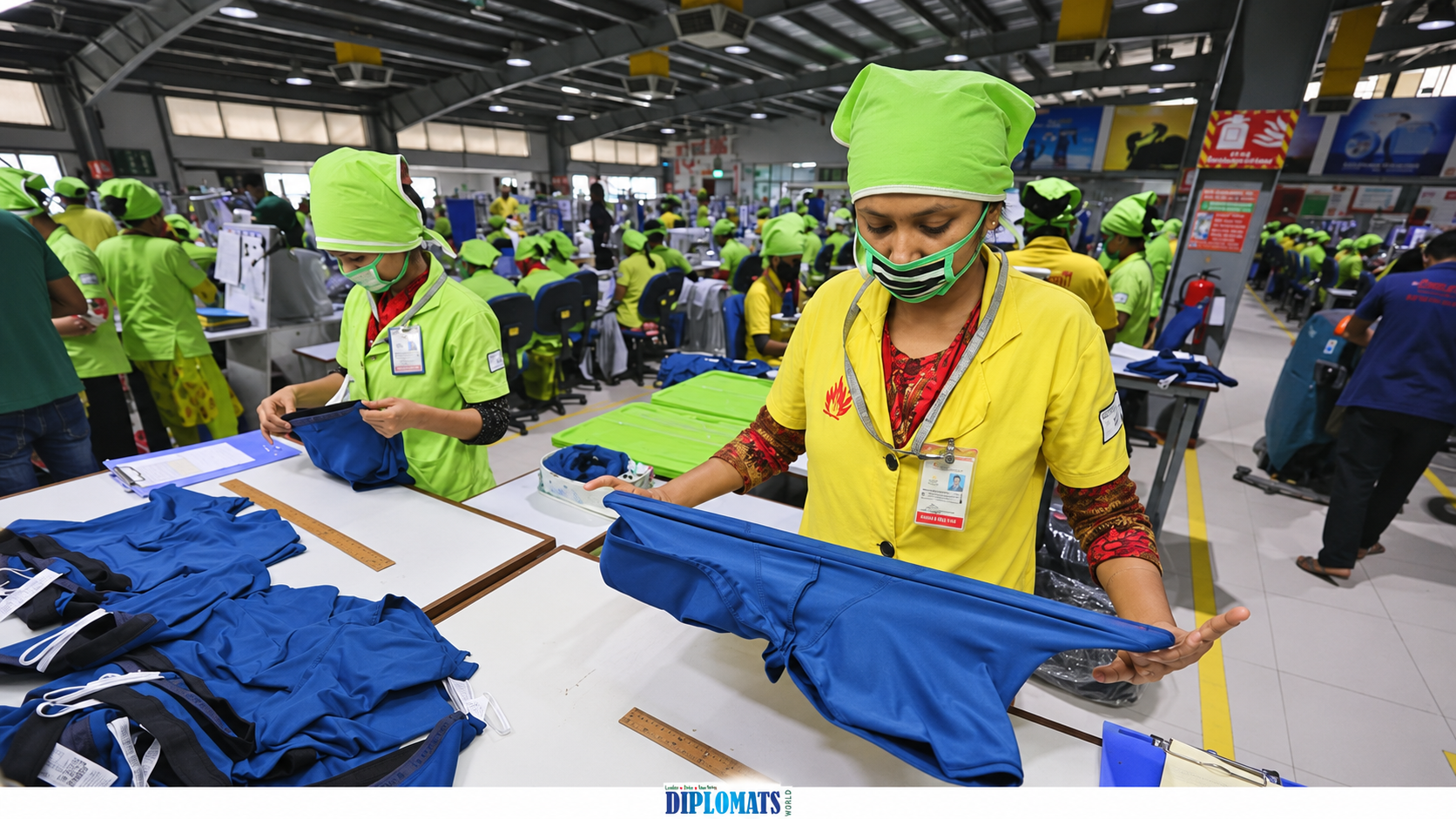
Bangladesh’s ready-made garment (RMG) sector is facing mounting pressure as wage-related unrest continues to disrupt production, force factory closures, and threaten export orders.
The Bangladesh Garment Buying House Association (BGBA) estimates that the ongoing turmoil could have caused losses of Tk3,000-4,000 crore over the past few weeks. Meanwhile, the Bangladesh Garment Manufacturers and Exporters Association (BGMEA) has launched a survey to assess the actual financial impact on factories.
Protests, work stoppages, road blockades and clashes have disrupted operations in major industrial areas, including Mirpur, Gazipur, Savar and Ashulia. Workers have been demanding an increase in the minimum monthly wage from Tk12,500 to Tk30,000 since October.
According to BGMEA data, production was disrupted at 399 factories on Wednesday and 341 on Thursday. Of the latter, 194 remained closed indefinitely under Section 13(1) of the Labour Act, including 122 in Gazipur, 40 in Savar-Ashulia and 32 in Mirpur. Another 147 factories declared holidays.
BGBA President Md Abdul Hamid stated that the disruption was impacting not only factories but also transport, banking, logistics, supply chains, and buying houses. He estimated that a single day of production shutdown at a garment factory could result in losses of Tk2,000-2,200 crore to the national economy.
The BGMEA has instructed member factories to provide details regarding production disruptions experienced during the first 18 days of November, including information on cancelled or reduced export orders, additional transport costs, and damage to factory assets.
Factories have been requested to submit their data by Sunday. The required information includes estimates of production shortfalls, wages paid during shutdowns, additional expenses incurred for overtime and air freight, discounts applied to delayed shipments, and declines in new orders compared to the previous season.
The association plans to use the findings to assess the damage and recommend policy support to the government.
Industry insiders warn that continued disruption could affect not only current orders but also business in the next season. October to December is a crucial period for producing and shipping winter garments to international markets.
Hamid stated that international buyers were growing cautious regarding new orders in Bangladesh, with some purchasers already cutting back on order volumes. He added that failures to meet shipment deadlines could compel exporters to resort to expensive air freight or provide discounts to buyers.
Mohiuddin Rubel, founder and CEO of Bangladesh Apparel Voice and a former BGMEA director, stated that prolonged disruptions could undermine buyers' confidence in Bangladesh's reliability as a sourcing destination.
He warned that if factories failed to maintain delivery schedules, orders could shift to competing countries, which would affect workers' jobs, supporting industries, and export earnings.
Labour organisations allege that the ongoing arrests and harassment of workers and union leaders are further complicating the situation and hindering dialogue.
In response to the unrest, the government formed a six-member Minimum Wage Board on November 1. During its second meeting on November 9, the workers’ representative proposed a minimum monthly wage of Tk32,000, while the employers’ side has not yet submitted its proposal.
The board has said the revised wage will take effect from December 1 once finalised.
Why it matters
The sector’s instability threatens Bangladesh’s export earnings and overall economic growth by jeopardising shipment deadlines and buyer confidence.