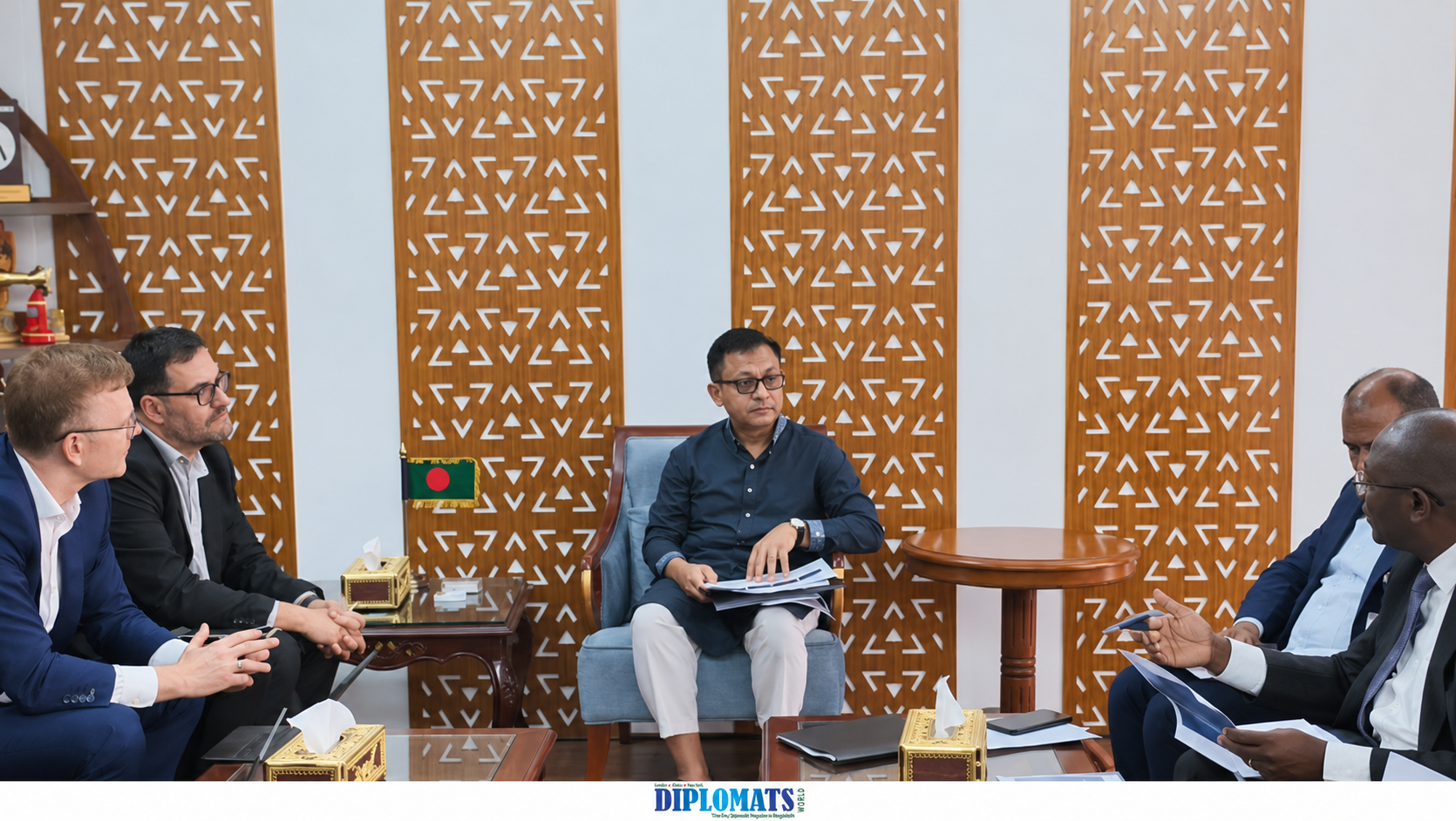
Bangladesh has sought policy and technical support from the World Bank to reduce business complexities, fully digitise government services and develop new export sectors beyond readymade garments (RMG), Commerce Minister Khandakar Abdul Muktadir has said.
The government aims to reduce delays in business approvals and complete the process within 14 days, the minister outlined during a meeting with an eight-member World Bank delegation led by Jean Pesme, division director for Bangladesh and Bhutan, at the Secretariat this morning (17 November).
He said the government is preparing a specific three-year action plan ahead of Bangladesh's graduation from the least developed country (LDC) category.
Under the plan, citizen and business services provided by various ministries and government offices will be brought online through Invest Bangladesh's One-Stop Service, also known as the National Single Window portal, he added.
Currently, businesses must visit multiple offices to obtain trade licences, environmental and fire safety clearances, and import registration certificates (IRCs). The government aims to complete the entire process within 14 days through digital services.
The minister identified export diversification as a key economic priority, highlighting leather and leather goods, non-leather footwear, shipbuilding, ship recycling, and light engineering alongside the ready-made garment (RMG) sector.
He said a new central effluent treatment plant (CETP) is planned at the Savar Tannery Industrial Estate to ensure environmental standards and international compliance and help secure Leather Working Group (LWG) certification.
He also expressed the government's intention to formalise the gold industry and develop it into an export-oriented sector for gold jewellery within the next few years.
Muktadir stated that discussions are currently underway regarding economic partnership agreements with Japan and South Korea, in addition to free trade agreements with the United Arab Emirates, Malaysia, Singapore, and the European Union.
He added that the government has also received in-principle approval for Bangladesh's inclusion in the Regional Comprehensive Economic Partnership (RCEP).
He informed the delegation about initiatives aimed at preventing duplication and enhancing coordination among ministries in the implementation of the Annual Development Programme (ADP), alongside efforts to improve the skills of project directors. He also mentioned that the government plans to transform the Bangladesh Foreign Trade Institute into a specialised institution.
Jean Pesme assured the delegation of support for trade facilitation, the implementation of the National Single Window, skills development in the leather and light engineering sectors, and research related to free trade agreements (FTAs).
He said that the World Bank Group and the International Finance Corporation (IFC) have expressed interest in working together to enhance the capacity of Bangladesh's private sector and productive enterprises.
He also emphasised structural economic reforms, financing for agro-processing and high-value-added industries, and improvements in technological capacity.
Sebastian Eckardt, regional practice director of the World Bank's Prosperity Department, stated that the upcoming three to four years are crucial for Bangladesh as the country prepares for its least developed country (LDC) graduation.
He stated that effective trade policy reforms, the removal of tariff and non-tariff barriers, and integration into global value chains could significantly increase foreign direct investment and employment.
He added that the World Bank is ready to provide training and technical assistance to improve the negotiating capacity of Bangladeshi officials in free trade agreement discussions.
World Bank Lead Economist Souleyman Coulibaly stated that reforms to para-tariffs and supplementary duties could enhance economic efficiency and export competitiveness. Referencing Vietnam's experience, he noted that trade reforms and upgraded logistics infrastructure can substantially boost Bangladesh's real export earnings and employment.
Why it matters
World Bank support for Bangladesh's business digitization and export diversification is critical for strengthening economic competitiveness ahead of LDC graduation.