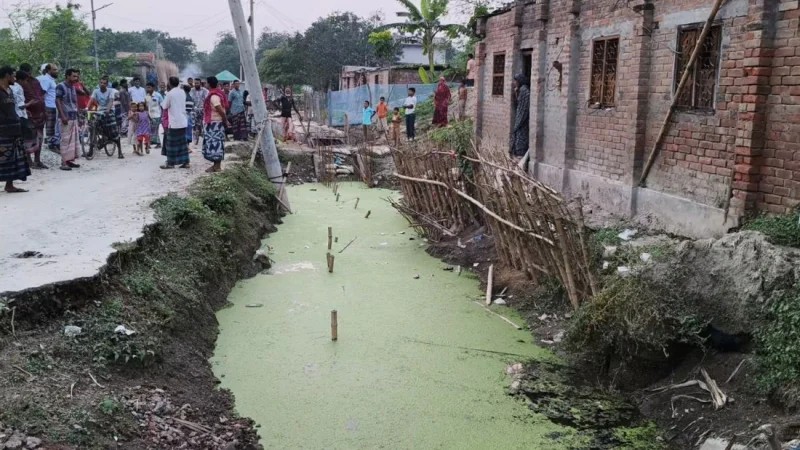
The stalled Tk9.33 crore drainage project in Shibganj, Chapainawabganj, serves as another example of how unfinished commitments can undermine the fundamental purpose of development.
The 2.1-kilometre drainage project, intended to address chronic waterlogging, has remained stalled for six months, leaving around 300 metres unfinished. Disputes with local residents over the necessary land for construction have prevented work from proceeding.
Meanwhile, ordinary citizens are left to navigate damaged roads, accumulated rainwater, and severely disrupted business activities while awaiting project completion.
A development project is only as valuable as the benefits it ultimately delivers to the public. Yet, public works in Bangladesh continue to be announced, funded, and initiated, only to languish incomplete for months or years.
While legitimate disputes and residents' concerns cannot be simply dismissed, authorities must actively listen, explain project requirements, and seek fair, practical solutions.
Negotiations, however, cannot become an excuse for indefinite administrative inaction. Municipal officials must resolve impasses and establish clear, publicly communicated deadlines for finishing remaining work.
This case raises critical questions about how public infrastructure projects are planned and managed. Potential obstacles such as land disputes should be identified before construction begins.
Feasibility assessments, prior consultations with residents, and contingency plans must be integral to project preparation rather than treated as afterthoughts.
Accountability must also extend directly to implementation, with authorities regularly publishing progress updates, monitoring contractors against agreed timelines, and explaining delays.
Every delayed project imposes tangible costs on ordinary citizens, who lose time, income, and access to essential services while waiting for delayed improvements.
True development must be measured by whether intended benefits actually reach the people, reinforcing that starting projects is a responsibility and finishing them is an obligation.
Why it matters
The persistent delays in public infrastructure projects impose significant economic and daily operational costs on ordinary citizens across Bangladesh.