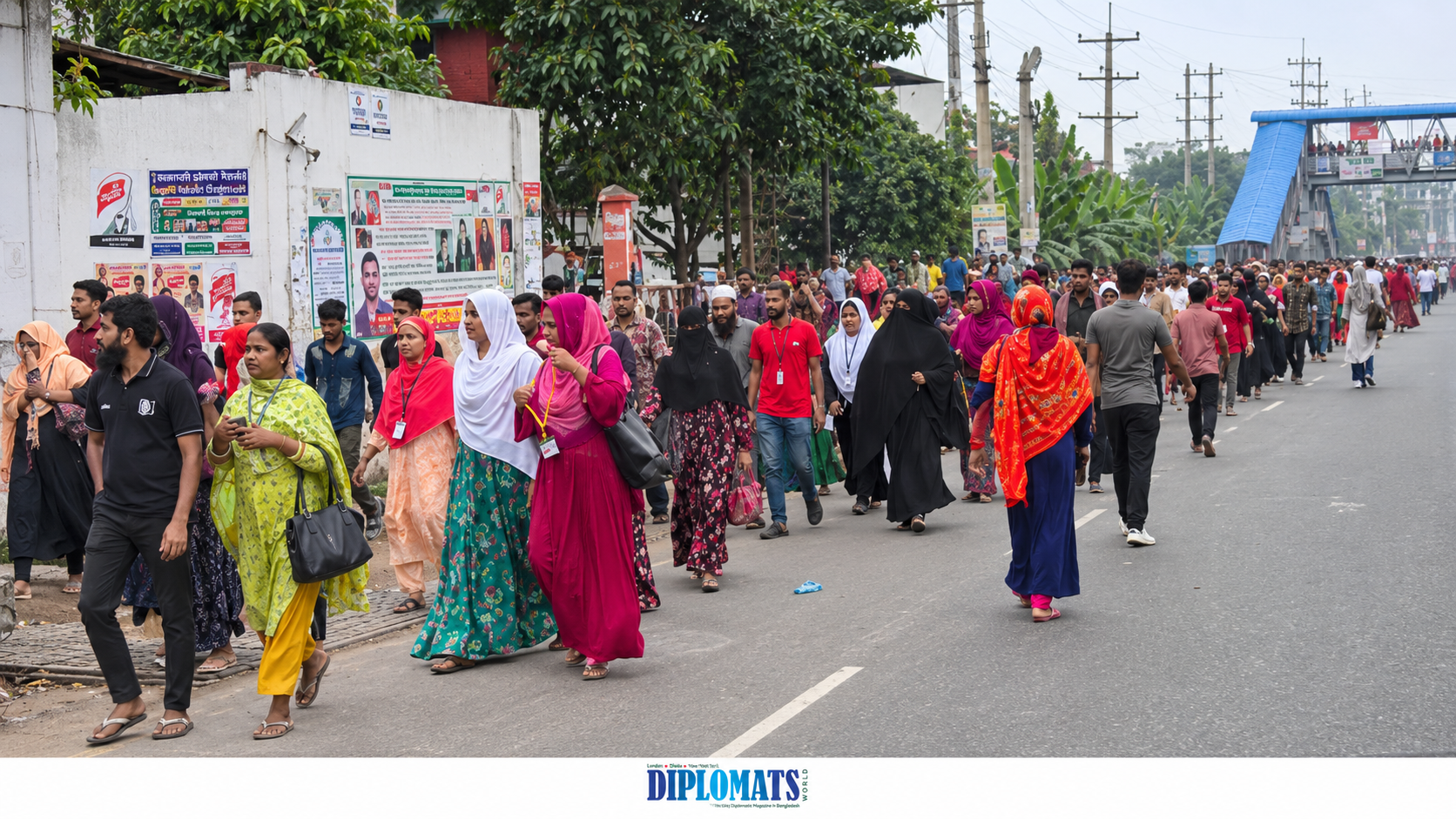
Bangladesh’s Savar‑Ashulia garment belt saw most factories reopen on Thursday after workers accepted a revised wage offer.
Most garment workers returned to their jobs voluntarily on Thursday morning after accepting factory owners' offer of a minimum wage of Tk17,000, along with increased allowances.
Production has resumed at the majority of factories, though three sites—Mango Tex, Green Life Knit Composite Ltd and Marma Composite—continue work stoppages, pressing for a Tk30,000 minimum wage.
Mominul Islam Bhuiyan, superintendent of police of Industrial Police‑1, confirmed that workers began returning voluntarily and that police remain on high alert, with additional personnel deployed at key factories.
The industrial police noted that the three striking factories are still demanding the higher wage, while 22 factories have declared general holidays and another 21 remain closed under Section 13(1) of the Labour Act.
The unrest followed several days of protests in Savar and Ashulia, where workers originally demanded a monthly minimum wage of Tk30,000.
In response, many factory owners offered a Tk17,000 minimum wage and increased allowances, a proposal accepted by most workers, allowing production to restart.
Despite the overall improvement, the continued stoppages at the three factories and the closures under Section 13(1) indicate that labour tensions persist in the sector.
The situation remains under close monitoring by industrial police to ensure stability and prevent further disruptions.
Why it matters
The partial return to work restores production in Bangladesh’s key garment hub, crucial for export earnings and labour stability.