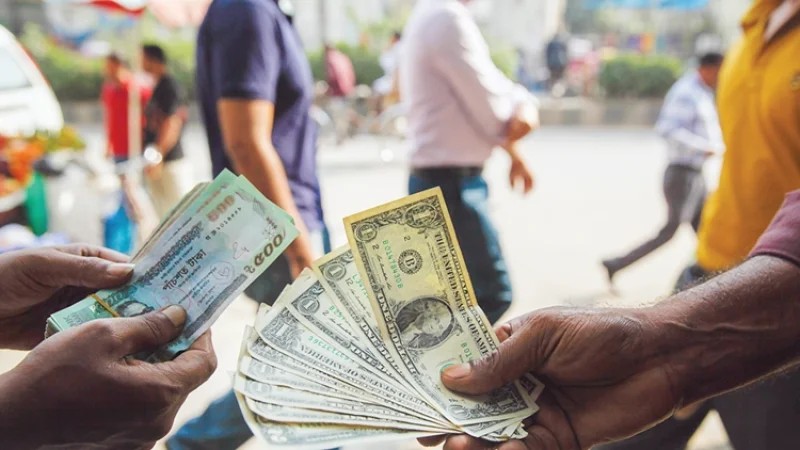
Fresh pressure has mounted on the country's foreign exchange market due to increased spending on energy and other commodity imports, coupled with a relatively slow supply of US dollars.
As a result, the price of the dollar is rising, and the growth trend of foreign exchange reserves has come to a standstill.
Most recently, on Tuesday, the dollar rate in the interbank currency market rose to Tk124.35.
On the other hand, over the past two days, several banks remitted inward remittances at a maximum rate of Tk124.70 per dollar.
To increase the supply of dollars in the market, Bangladesh Bank initiated an auction on Tuesday to sell $100 million.
However, after receiving price bids from banks, the auction was canceled at the last moment, and no explicit explanation was provided to the relevant banks regarding the reason for this decision.
According to bankers, the demand for dollars has risen due to higher LNG prices on the international market and increased spending on energy imports, while export earnings, remittances, and foreign loan disbursements have not grown at the expected rate.
According to Bangladesh Bank data, expatriates remitted $11.46 billion during the July–October period of the current FY27, representing a 13% increase compared to the same period of the previous fiscal year, while export earnings grew by 6% to reach $17.04 billion.
However, in the first two months of the current fiscal year (July–August), import spending grew by 12.10% year-on-year to reach $12.20 billion, with expenditure on petroleum imports nearly doubling to $2.49 billion.
Meanwhile, gross reserves stood at $36.43 billion on Tuesday, while reserves under the International Monetary Fund's BPM6 calculation method stood at $31.56 billion.
Why it matters
Rising import costs and foreign exchange pressures directly impact Bangladesh's economic stability and reserve levels.