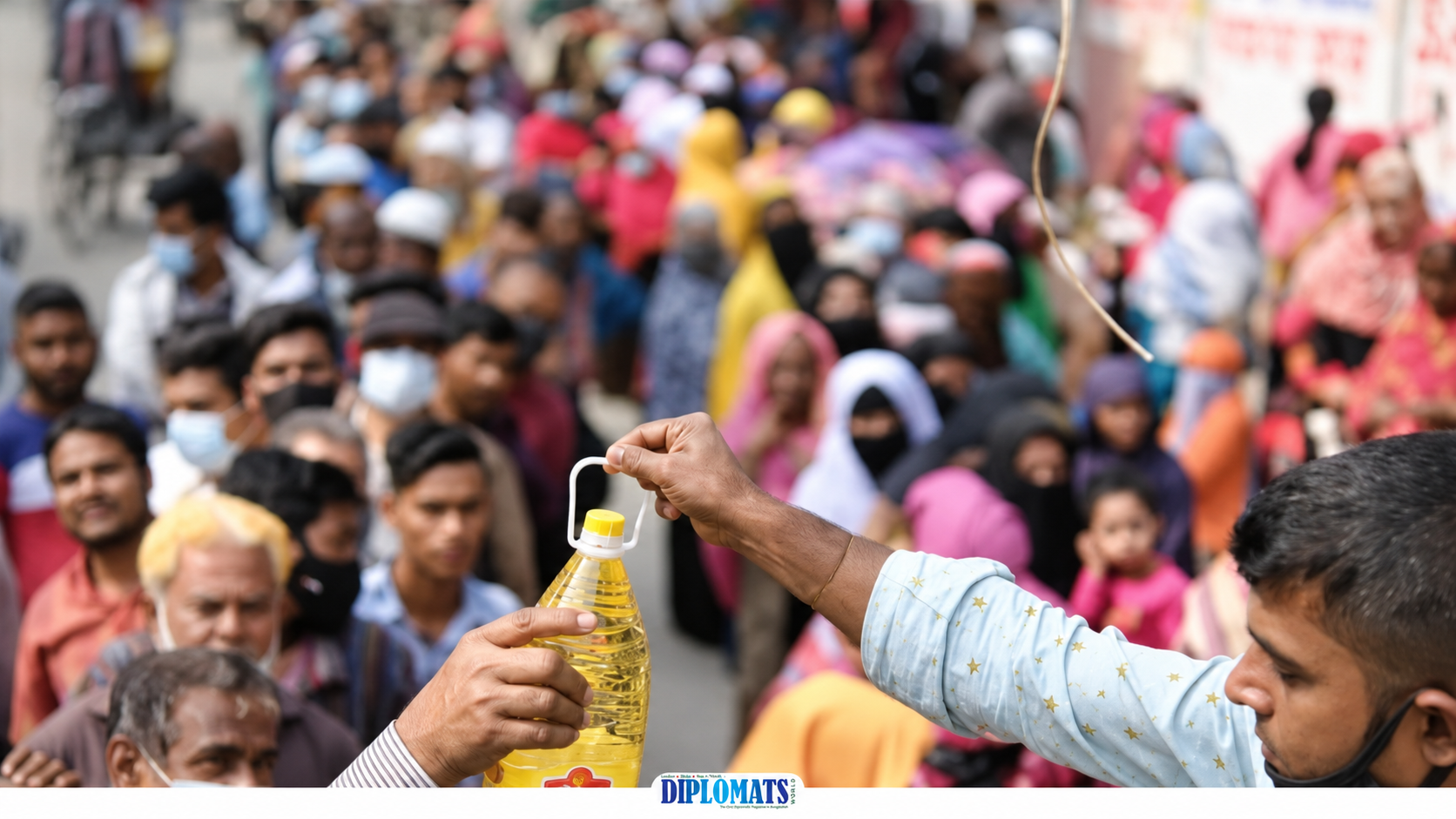
For several decades, most Bangladeshis have shared the same aspirations: to graduate from university, secure a reasonably good job, purchase a home, provide their children with higher education abroad, care for their aging parents, and eventually retire with dignity.
"We are not dreaming of extravagant wealth here," the statement noted. "We are simply dreaming of a level of financial security and stability that we are rapidly losing."
Pay day is followed by obligations to pay monthly rent, buy groceries, pay school fees, transportation and utility bills, and other expenses. One unexpected major expense, such as a major medical procedure, can quickly wipe out an individual's savings.
Although some families are experiencing an increase in overall income, even for them, after these expenditures are made, they are left with very little, if any, spending money for the month.
Recent World Bank reports indicate that during FY 2026, an additional 2.1 million people are projected to be in poverty. Further, during this same period, the national poverty rate in Bangladesh increased from 18.7% to an estimated 21.4%.
We are now faced with the much greater challenge of keeping previously elevated living standards attained by some of the population from slipping back into poverty.
Meanwhile, for the poorest of the population, increasing costs of production can rapidly change their lives for the worse, whereas for the wealthy, such increases may be little more than minor inconveniences.
According to the Bangladesh Bureau of Statistics' Living Standard Survey of 2025, the average monthly income of urban households stands at Tk 33,513. Meanwhile, the average monthly expenditure of human households in Bangladesh is Tk 35,311, resulting in an average monthly deficit of Tk 1,798.
During this period, 47% of the households in our survey were reported to have taken out loans to meet their living expenses. These numbers demonstrate the financial challenges faced by families in Bangladesh.
Families may be stretched financially so much that they are unable to purchase school supplies, have no other way of supporting children through education to attain employment, and are thus unable to secure a better future for them.
An overlooked aspect of the salary crisis is that middle-class spending involves aspiration just as much as consumption. Middle-class parents send their children to better schools to create future opportunities for them, and they also pay for coaching to increase their chances of gaining admission to better universities.
Another growing concern for families in Bangladesh is the rising cost of housing. In Dhaka, for example, many families must move to smaller apartments or endure extremely long commutes from their workplaces in order to meet their monthly expenses.
While the rent in such a location may be low, the opportunity cost associated with it—lost time, stress, and greater distance from schools, hospitals and other services—may be quite high.
We believe that with good financial security, middle class households should be able to set aside savings during periods of sickness or unemployment to enable them to educate their children. However, given the ongoing increases in prices, this is becoming increasingly difficult to achieve.
In October 2026, the average nominal wage growth rate was 7.63%, which was lower than the general inflation rate of 8.27%. This resulted in a real-term decrease in wages during the period. Even if a household manages to save Tk 10,000 each month, they would still face a financial shortfall to cover monthly expenses if the costs of education or health services were to increase.
Of likely greater concern to most households is inflation’s impact on families’ ability to save or take out loans to finance larger purchases and achieve economic mobility.
Based on the information currently available to us, any realistic scenario for addressing the current middle-class crisis in Bangladesh would need to include measures to improve overall wage levels for the population as a whole, in addition to increasing investment and productivity in the economy.
We understand that the missing middle class in Bangladesh is largely due to the overall economic slowdown. Bangladesh should also be proactive to encourage and empower females to participate in the economy.
It is evident that no single policy will likely result in an immediate transformation. While inflation control is arguably the most important thing we can do now, simply controlling inflation will not solve the situation of the middle class. Further improvements to the economy( better job opportunities, better public health and education facilities, improved public transport, etc) are also needed.
For decades, the middle class of Bangladesh has lived with a certain promise -- to work hard today to give his children an easier future.
A father delays purchasing his own house to pay for his children’s education. A mother deprives herself of the ordinary pleasures of life in order to save up for her children. A young man works overtime every week in the vain hope that one day, his family will not have to count every single taka to determine whether they will be able to make it through this month.
What happens to this family when the sudden need for additional expenses exhausts their accumulated savings? When they realize that no amount of additional work will improve their situation? When they begin to believe that their children will not have a better life than they did?
These are the true tragedies of a diminishing middle class. It’s not just losing your means of economic survival. It means slowly losing hope for the future.
We must do all we can to preserve hope, especially among the millions of families that struggle to just get by. All they have ever wanted is the right to live and to be able to dream of a better future for their families.
If in the future, we look back on the development of Bangladesh and are unable to find sufficient examples of fathers and mothers being able to rest easy at night, knowing their family is safe and secure, then we should question how prosperous our country really is.
Why it matters
Rising inflation and negative real wage growth are eroding household savings and increasing poverty across Bangladesh.