News media stakeholders have called for coordinated action to advance policy discussions and implement the recommendations of the Media Reform Commission. They emphasized the need for comprehensive structural reform to protect editorial independence, ensure journalists’ professional and financial security, and restore audience trust.
They also stressed the importance of strengthening self-regulatory mechanisms within news outlets, including adherence to editorial policies, transparent and accountable management systems, and accessible grievance redress mechanisms for audiences.
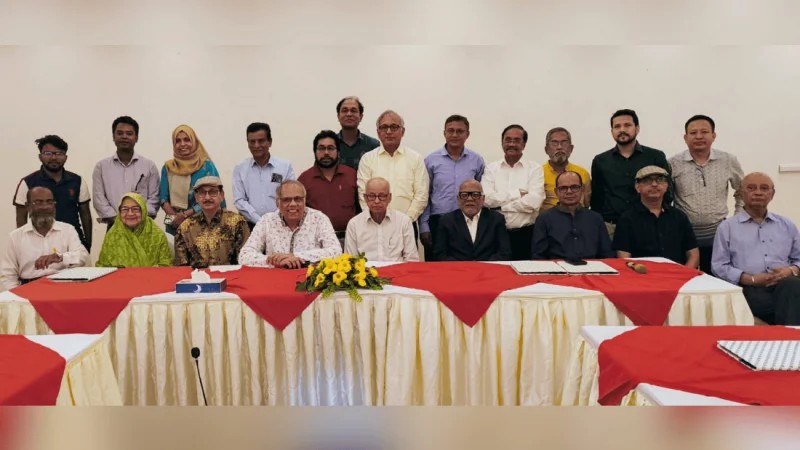
These observations emerged on Sunday at a divisional consultation in Chittagong, which was organized by the Media Resources Development Initiative (MRDI). The event was held to discuss ways to improve the professional and ethical standards of journalism in Bangladesh and to assess a viable framework for effective media self-regulation.
The consultation marked the fourth event in MRDI's series of divisional consultations, following earlier sessions held in Khulna, Barisal, and Sylhet. The event was conducted under the auspices of the Canada Fund for Local Initiatives (CFLI) and received financial support from the High Commission of Canada in Bangladesh.
The discussion was attended by news media owners, publishers, editors, news managers, gatekeepers, leaders of journalist unions and associations, university teachers, and civil society representatives from Chittagong and other districts of the division.
In his opening presentation, MRDI Executive Director Hasibur Rahman stated that more effective self-regulation would leave less scope for external interference in the news media. He added that strengthening the media’s own accountability mechanisms was essential to protecting press freedom.
“Press freedom depends on the trust of the audience. As long as readers, listeners and viewers have trust in the news media, they will be able to enjoy that freedom. To maintain this trust, news outlets must establish their own accountability mechanisms,” he stated.
Rahman also stressed the need to develop separate codes of conduct for editors and owners, alongside those for journalists. He expressed the expectation that advocacy for news media self-regulation would continue under MRDI’s five-year Strategic Action Plan on Advocacy for News Media Reform in Bangladesh (2025–2030).
The consultation featured policy discussions regarding the implementation status of the Media Reform Commission’s recommendations, as well as the way forward.
Participants stated that the recommendations—which were formulated through consultations with journalists, editors, owners, and civil society representatives throughout the country—necessitated transparent, coordinated, and time-bound implementation.
They stated that reform efforts should not be restricted to selected issues but should instead pursue fundamental structural change. They added that comprehensive reform of laws, policies, and institutional frameworks could help protect editorial independence, ensure financial security, and restore public trust.
Participants also highlighted the need for regular reviews of reform progress and continued dialogue among stakeholders.
Kamal Ahmed, former chief of the Media Reform Commission and consulting editor at The Daily Star, stated that the recommendations reflected a consensus across the media industry, which included editors, owners, and working journalists.
“The recommendations of the Media Reform Commission reflect the consensus of the entire industry, including editors, owners and working journalists,” he stated. He added that piecemeal legal amendments will fail to resolve the ongoing anarchy in the media landscape, asserting that comprehensive structural reform is required. “We must establish an independent permanent media commission and build self-regulation on the foundation of our own ethical code of conduct,” he said.
“If we fail to regulate ourselves, the government will inevitably step in with restrictive and coercive legal controls by using laws like the recent draft cyber act,” he added.
Participants agreed that sustainable self-regulation required strong and independent editorial policies capable of resisting pressure from the government, media owners, advertisers and political actors.
Rejoanul Haq Raja, the director of news and current affairs at Channel S, stated that professional and credible journalism is essential in order to resist external pressure.
“The more authentic and professional our journalism is, the greater courage and strength we will have to withstand external pressure. This is the essence of self-regulation,” he said. “Before demanding accountability from others, we must first establish our own internal accountability. Only when we hold ourselves accountable can we speak with authority about others.”
Regarding journalists’ working conditions, participants stated that ethical journalism was inseparable from financial security. They urged media owners to provide timely salary payments, formal appointment letters, lawful benefits, and safe working environments.
Participants also stressed the need to give greater consideration to the experiences and realities of community news outlets and journalists outside Dhaka in national-level discussions and policy initiatives on media self-regulation.
They stressed the importance of developing an effective, practical and inclusive self‑regulation framework that accounts for the diverse realities of news media across Bangladesh.
Why it matters
Implementing the Media Reform Commission's recommendations is vital for safeguarding editorial independence, improving professional standards, and restoring public trust in Bangladesh's news media.