Bangladesh’s exports to 11 South American markets reached $195.17 million in the first quarter of the current FY27. This growth comes as the government has stepped up efforts to diversify export destinations through trade fairs and the promotion of non-traditional products.
According to Export Promotion Bureau (EPB) data, Bangladesh exported goods worth $195.17 million to the region during July-September of FY27, with Brazil, Chile and Peru emerging as the three largest destinations.
Brazil led the list with $70.82 million, followed by Chile at $51.87 million and Peru at $24.24 million. Colombia accounted for $18.05 million, while exports to Uruguay and Argentina reached $11.63 million and $10.28 million, respectively.
The figures highlight South America’s potential as a market for Bangladeshi products beyond the country’s traditional destinations in Europe and North America.
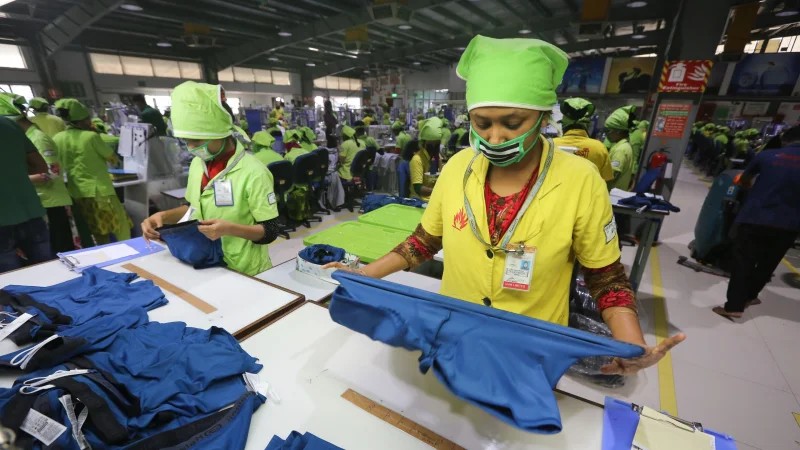
Readymade garments continued to dominate the export basket. However, Bangladesh’s recent participation in Home Show Brazil 2026 in São Paulo also highlighted opportunities for jute goods, leather products, home décor, handicrafts and other lifestyle products.
Bangladesh participated in Home Show Brazil 2026, which took place from August 11 to 13 at Distrito Anhembi in São Paulo. The participation received financial support from the EPB and was managed by the Bangladesh Embassy in Brasília.
Four Bangladeshi companies—Jihan Plastic Industries, Mother Tannery, Rainbow Jute, and Classical Handmade Products—showcased their products across five booths at the exhibition.
Their displays featured jute goods, bags, leather products, natural-fibre baskets, home décor items, bamboo products, terracotta, clay products, and Nakshi Kantha.
The EPB and the Bangladesh Embassy also operated a promotional booth featuring information on Bangladesh’s exportable products and key export sectors.
Business-to-business meetings took place during the fair, with prospective buyers visiting the Bangladeshi stalls and expressing interest in the products on display.
As part of the fair, a seminar on the production and export of home and lifestyle products from Bangladesh was organized to promote the country's goods among Brazilian business organizations and international buyers.
Export Promotion Bureau (EPB) vice chairman and chief executive Mohammad Hasan Arif stated that the bureau was working to diversify Bangladesh’s export basket. He added that the EPB aimed to strengthen the country’s presence in emerging international markets through more strategic and professional participation in trade fairs.
He said that excessive dependence on readymade garments and a limited number of export destinations could expose Bangladesh’s export earnings to external shocks, making product diversification and market expansion increasingly important.
Arif stressed that exporters should conduct advance research into market demand, consumer preferences, pricing, competition and business practices before participating in international exhibitions to achieve better commercial outcomes.
He also emphasized the importance of strengthening national pavilion branding, enhancing exporters' preparedness, and engaging directly with international buyers in order to transform trade-fair participation into sustainable business opportunities.
Bangladesh’s export basket to the 11 South American markets remains heavily concentrated in apparel.
According to product-wise figures from the EPB spreadsheet, exports of woven apparel and clothing accessories amounted to around $84.53 million during July-September, while shipments of knitted or crocheted apparel stood at approximately $70.10 million.
Combined, the two categories generated around $154.63 million, equivalent to nearly 79.2 % of total exports to the 11 markets.
Pharmaceutical products contributed around $6.58 million, while footwear and related products accounted for approximately $5.71 million.
Other textile products, leather goods and travel articles also featured in the export basket, indicating scope to expand the range of products sold in the region.
Brazil and Chile together accounted for $122.69 million, or nearly 62.9%, of total exports to the 11 markets.
Their importance makes them key destinations for targeted export promotion, while Peru and Colombia also offer opportunities for further commercial engagement.
Why it matters
Diversifying export markets is crucial for Bangladesh's economic resilience, reducing vulnerability to demand shocks in traditional Western markets.