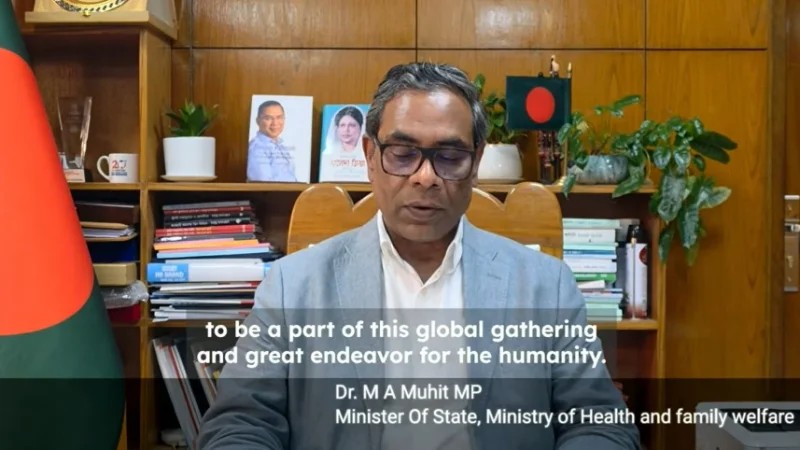
The Government of Bangladesh has committed $130 million over the next five years to strengthen eye care services across the country. The investment is expected to provide primary eye care to approximately 20 million people, fund one million free cataract surgeries, and distribute 10 million pairs of spectacles.
The commitment was announced at the first-ever Global Summit for Eye Health, which was hosted by the government of Antigua and Barbuda and co-hosted by Bangladesh, Guyana, Ireland, and Nigeria, in collaboration with the World Health Organization (WHO). The summit was convened by the International Agency for the Prevention of Blindness (IAPB).
The commitment forms part of a broader package of pledges made by governments, development agencies, civil society organisations and private-sector partners aimed at expanding access to eye care and reducing avoidable sight loss worldwide.
Bangladesh faces significant challenges in addressing preventable and treatable vision impairment. Greater access to cataract surgery, spectacles and community-based eye care could help more people continue their education, remain in employment and participate fully in society.
According to the International Agency for the Prevention of Blindness (IAPB) Value of Vision report, an investment of approximately $129 million in Bangladesh's eye health sector between 2026 and 2030 could generate an estimated $2.31 billion in economic benefits. The report highlights potential gains in productivity and education, alongside a reduction in sight loss.
State Minister for Health and Family Welfare Dr MA Muhit stated that the government aimed to ensure vision screening for every citizen and to address avoidable blindness and visual impairment through the national health system.
He said the government would work with national and international development partners to expand eye care services across the country.
VisionSpring, an organization that works to improve access to eye care among underserved communities in Bangladesh, also announced plans to expand its programmes.
The organisation aims to provide eyeglasses to 7.5 million people in Bangladesh by 2030, contributing to its global commitment to reach 20 million more people.
Misha Mahjabeen, managing director of VisionSpring Bangladesh, stated that eyeglasses are essential for improving livelihoods, independence, and well-being. She noted that for over two decades, the organization has trained frontline workers via community-based networks to deliver reading glasses to rural areas.
VisionSpring plans to expand partnerships with factories, global brands, and drivers’ associations to reach garment and transport workers, while supporting government efforts to broaden eye care access. The organization aims to provide eyeglasses to 7.5 million people in Bangladesh by 2030, contributing to a global goal of reaching 20 million more people. Through CatalEYES technical assistance, demand-generation strategies, and affordable, fit-for-purpose eyeglasses, the initiative seeks to strengthen service delivery, increase uptake, and close the clear vision gap.
A nationwide study in Bangladesh revealed that 3.2% of adults aged 35 and older suffer from glaucoma. Additionally, the THRIVE trial demonstrated that supplying reading glasses to workers in jobs that require near vision correlated with a 33.4% increase in median monthly income.
The findings highlight the importance of sustained investment in accessible and affordable eye care, including measures to ensure women and girls can access services equally.
IAPB Chief Executive Peter Holland stated that the summit marked a significant moment for global eye health by bringing together governments, organizations, and private-sector leaders around commitments to expand access to sight-saving services.
He stated that the pledges could assist individuals in accessing education, staying employed, caring for their relatives, and engaging more completely in society.
Why it matters
The $130 million investment addresses preventable vision impairment while boosting economic productivity and household incomes across Bangladesh.