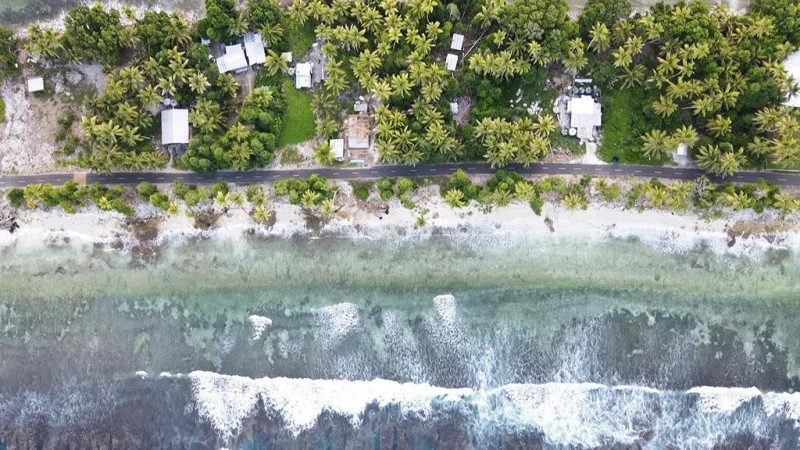
As the Asian Development Bank released its flagship Asia–Pacific Climate Report 2026: Coastal Risks on the Rise—Actions for a Resilient Future, the findings hit home sharply for Bangladesh. While coasts across the region generate $7 trillion in annual economic output, they are retreating rapidly under the weight of rising seas and intensifying hazards.
For a deltaic nation where millions live within low-elevation coastal zones vulnerable to tidal surges, cyclones, and soil salinity, the report underscores an urgent reality: adaptation is no longer optional; it is an economic and existential imperative. Across 30 coastal economies evaluated in the report, annual flood damages could skyrocket from roughly $27 billion today to between $172 billion and $199 billion by 2050, and surge up to $739 billion by 2100 under high-emissions scenarios if adaptation measures stall.
For Bangladesh, regional trade hubs like Chattogram and Mongla face severe risks. Across the wider Asia-Pacific, port disruptions alone put $40 billion to $45 billion at risk annually. Furthermore, major South Asian economic centers—including Kolkata, Mumbai, and regional trade arteries linked to the Bay of Bengal—are warned that once-in-a-century coastal floods could become annual occurrences by the end of the century.
The ADB report emphasizes a silver lining: investing in resilience yields returns up to 20 times greater than the required costs. Keeping regional flood damages near today's levels would demand $9 billion to $19 billion annually in targeted coastal protections—an investment that could prevent up to $360 billion in yearly damages.
Yevgeniy Zhukov, director general of ADB’s Climate Change and Sustainable Development Department, stressed that the region has reached a critical turning point requiring long-term, adaptive, and risk-informed planning to safeguard its coastal engines, ports, and vulnerable millions.
Why it matters
The ADB report highlights that urgent coastal adaptation is essential to protect Bangladesh's key trade hubs and prevent multi-billion-dollar economic damages from rising sea levels.