As India hosted the BRICS summit in New Delhi in September 2026, a familiar question returned: does the grouping produce anything beyond summit statements?
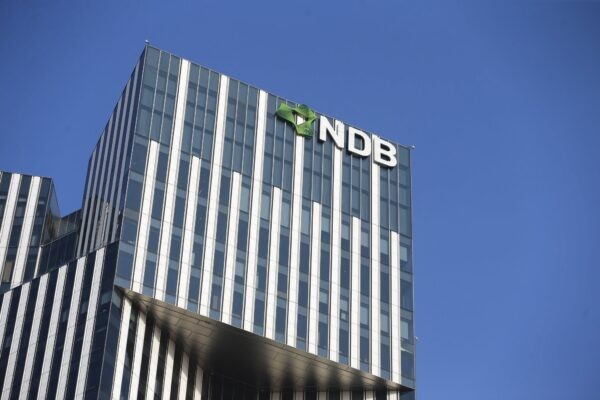
The New Development Bank (NDB) offers the clearest evidence in the affirmative.
India initially proposed the bank at a previous BRICS summit held in New Delhi in 2012, and its 2026 chairship of the bloc brought that concept full circle.
Assessing a development bank’s performance is complex; the impact of major announcements pales compared with the actual funds disbursed to projects.
The NDB’s record can thus be evaluated on three broad counts.
The first factor is the total amount of money the institution has lent and the specific portion of those funds that has actually been disbursed.
The second is whom the bank lends to.
The third is how it raises the money it lends.
Regarding all three areas, the overall picture is considerably more encouraging than the low public profile of the New Development Bank (NDB) might suggest.
By the end of June 2026, the NDB had approved loans worth approximately $44 billion for 141 projects spanning clean energy, transport, water systems, and digital infrastructure.
Of that amount, roughly $25 billion had already been paid out to borrowers.
Many development banks approve large loans but pay out much less, and much more slowly.
A bank that has paid out more than half of what it approved is doing real work, rather than simply signing agreements.
Public figures from the NDB show what this money is funding, including 2,400 megawatts of clean energy capacity currently under way, 1,400 kilometers of tunnels and canals, 43 schools built or upgraded, and a large increase in sewage treatment capacity.
Its founding members were Brazil, Russia, India, China, and South Africa.
It has since added Algeria, Bangladesh, Egypt, the United Arab Emirates, and Uzbekistan.
Its members now stretch from South and Central Asia to Africa, the Middle East, and Latin America.
India’s place in the NDB is unusual.
It helped create the bank, it owns an equal share of it, and it is one of its biggest borrowers.
Each founding member holds about 18.7 percent of the bank’s capital.
This was designed so that no single country could control it.
Even so, India has used the bank’s loans more than most members.
Since 2016, the bank has approved 32 initiatives for India, valued at nearly $9.5 billion, across transport, social development, and clean energy sectors.
Recent approvals include a $300 million clean energy project involving REC Limited and an affordable housing project backed by the Housing and Urban Development Corporation (HUDCO).
Earlier, the bank provided $500 million towards the 82-km long rapid transit line between Delhi and Meerut.
Indian Finance Minister Nirmala Sitharaman has described the value of the New Development Bank (NDB) less in terms of monetary contributions and more in terms of shared knowledge.
In August 2026, she stated that development banks should assist countries in better planning their cities and infrastructure, rather than solely funding them.
New Development Bank President Dilma Rousseff, who previously served as the president of Brazil, responded by highlighting India's Viksit Bharat development plans as a model for other member nations.
It is a small but telling detail: the bank India proposed is now led by a Brazilian who uses Indian policy as an example for everyone else.
The third count, concerning how the bank funds itself, is where India’s chairship of BRICS this year has left its clearest mark.
In August 2026, the bank and the Indian government held a joint meeting focused on bringing more private money into development projects.
Rousseff called this a key priority as members look for ways to fund large infrastructure beyond what governments alone can pay for.
Sitharaman explained that development banks can make projects safer and more predictable for private investors, thereby attracting a greater volume of private capital.
On September 10, two days before the BRICS summit opened, the bank raised 7 billion Chinese yuan through a bond sale in China.
This gave it a new source of funds, separate from its usual channels.
On the same day, it launched a BRICS-NDB knowledge portal linked to India's chairship.
These steps will not make headlines outside financial circles.
A bank that is capable of raising funds across various markets and drawing in private investors is not required to wait for its member governments to inject additional capital.
That makes it a more reliable lender for developing countries.
At the same time, however, increasing reliance on Chinese bond markets could raise concerns about whether the bank’s funding is evenly distributed among its members.
The NDB can be an important source of finance for the Global South, helping countries build power plants, transport links and water systems.
It needs steady funding, careful planning, and trust between members.
India’s chairship year has pushed the bank toward a broader funding base.
Whether that shift lasts will become clearer in 2027, when India will host the bank’s annual meeting and this year’s results can be measured against what follows.
Why it matters
The NDB's expanded membership and increased infrastructure lending directly support Bangladesh's development financing needs and regional connectivity goals.