Bangladesh officials at the mission in Jeddah told a parliamentary committee yesterday that the two Bangladeshis who were executed in Saudi Arabia had, in fact, been sentenced to prison terms ranging from six months to 15 years rather than to the death penalty. The foreign ministry conveyed this information to the committee on the same day.
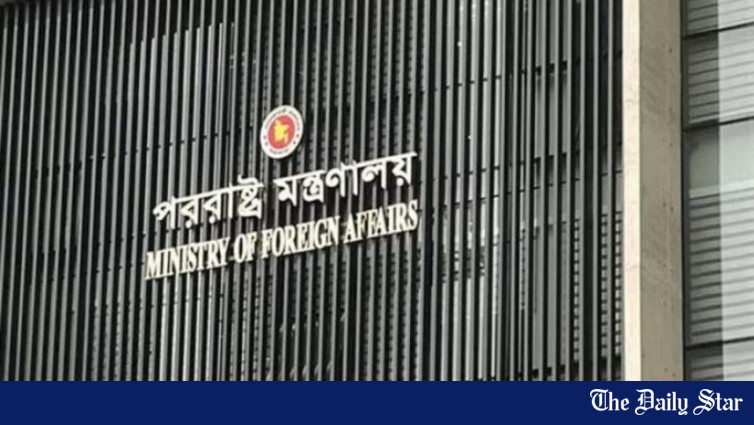
The details were presented during a session of the Parliamentary Standing Committee on the Ministry of Foreign Affairs held at the Jatiya Sangsad Bhaban.
The ministry told the committee that the manner in which prisoners were classified on a Saudi Arabian list had led officials to believe that.
The ministry has requested clarification from Saudi authorities, and the committee has instructed the ministry to brief the panel as soon as a response is received.
The committee requested a report examining whether any negligence occurred at the Bangladesh Consulate in Jeddah, what remedial actions were taken if lapses were identified, and what measures are being implemented to prevent similar incidents in the future.
According to information presented to the committee, Saudi Arabia executed two Bangladeshi nationals on 14 October, doing so without prior notification to Dhaka.
The individuals have been detained since August 2023 on separate charges, one for alleged “cybercrime” and the other for alleged “adultery.”
The foreign ministry told the committee that Saudi Arabia had supplied a list of roughly 2,500 prisoners about 14 days before the scheduled executions. The list included the names of two Bangladeshi nationals, but their individual cases were not clearly identified.
After the meeting, committee chairman Zohra Adib Chowdhury told reporters that members were seeking an explanation for the consulate’s delayed action and were questioning whether any negligence or shortcomings had occurred in the process.
She said Bangladesh maintains good relations with Saudi Arabia and asked why they had not been informed earlier, adding that the incident highlighted weaknesses in the overall process.
She noted that, with respect to the information exchange that occurred 14 days before the executions, the ministry has admitted the report was not examined adequately.
When questioned why officials had confused the cases of the two executed Bangladeshis with ones that carried prison terms, a foreign‑ministry official who requested anonymity told The Daily Star that Saudi Arabia can impose the death penalty for cybercrimes involving online activity deemed to be directed against the kingdom.
The official noted that cyber offences such as hacking, data theft and online fraud are not automatically punishable by the death penalty.
Saudi Arabia has a history of imposing the death penalty for adultery, although such sentences are extremely rare, an official said. Available records show that Saudi courts have handed down prison sentences for adultery in previous years, the official added.
"So, it was difficult to realise from the conviction details that the two Bangladeshis had been sentenced to death, particularly as the sentence column was left blank in the shared lists," the official noted.
The parliamentary committee also examined reports of abuse targeting Bangladeshi women workers in Saudi Arabia and other Middle Eastern countries.
The foreign ministry told the committee that roughly one to two percent of Bangladeshi women workers in Saudi Arabia have experienced abuse. The committee urged the ministry to adopt measures intended to bring such incidents down to zero.
After the meeting, Zohra told reporters that the ministry had reported that roughly 169,000 Bangladeshi women workers are currently employed in Saudi Arabia.
The committee was presented with information indicating that workers are questioned about their experiences when they visit the mission to collect their passports. Surveys on the same topic are also carried out by third‑party organisations.
The ministry further reported that 1,364 women domestic workers had been rescued and safely repatriated.
Zohra noted that, while a rate of one or two percent may seem modest, the absolute number of women affected is nonetheless significant.
The meeting was chaired by Zohra Adib Chowdhury and attended by committee members ABM Mosharraf Hossain, SK Azizul Bari, Saeed Al Noman, Humam Quader Chowdhury and Sanjida Islam. State Minister for Foreign Affairs Humaiun Kobir also took part in the session following a special invitation from the committee.
Why it matters
The execution of two citizens without prior notification to Dhaka highlights critical communication gaps and oversight vulnerabilities in consular protection abroad.