Global food and energy prices are projected to increase sharply this year and remain under pressure through 2027, a trend that could intensify inflationary pressures in import‑dependent economies such as Bangladesh.
The World Bank’s Commodity Markets Outlook, published on 28 October, forecasts that global commodity prices will rise by 23 percent in 2026.
The principal factors are a 32 % rise in energy prices linked to the Middle East conflict, disruptions to grain shipments, and weather risks associated with a strong El Niño.
Food commodity prices are projected to increase by roughly 10 % in 2026 and a further 7 % in 2027, resulting in a cumulative rise of about 18 %.
The bank warned that the combined shocks could worsen inflation and food insecurity in vulnerable economies.
The report does not give a Bangladesh-specific forecast for food inflation or domestic prices.
Bangladesh’s exposure will depend on international prices, import costs and exchange rates. It will also be affected by how much of these costs are passed on to consumers.
Food inflation in South Asia rose year‑on‑year to 5.8 % in the third quarter of 2026, exceeding the region’s 2010‑2019 average of 5.6 %. This marks a modest increase above the historical decade‑long benchmark.
The bank said projected increases in grain and vegetable oil prices are likely to intensify these pressures.
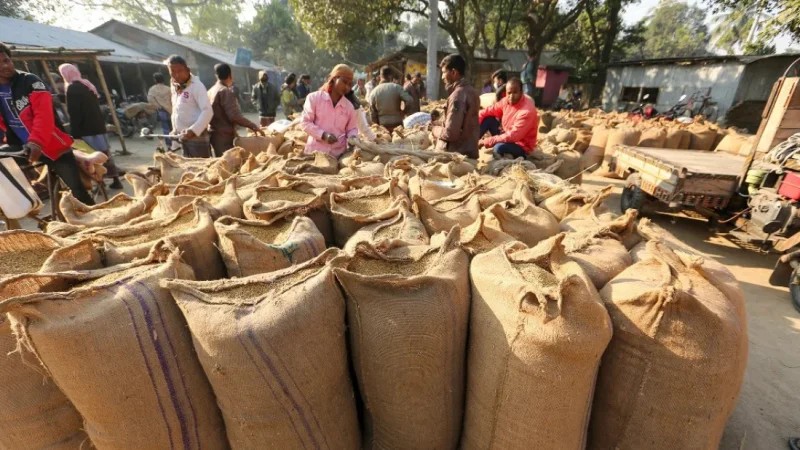
Rice prices in the third quarter of 2026—covering July through September—were 24 percent higher than a year earlier, a rise linked to El Niño‑related weather concerns across South and Southeast Asia.
The bank projects that rice prices will rise by 10 % in 2026 and by 12 % in 2027, as global rice production is expected to fall for the first time in a decade.
Wheat prices are projected to jump 28% in 2026 and 14% in 2027.
During the third quarter, grain prices increased by 9%, putting them 25% above the level recorded a year earlier. Wheat prices rose 13% in the same period, making them 40% higher than a year ago.
In October, the bank’s overall food price index remained 12 percent higher than it had been at the same time the previous year.
Energy prices are projected to rise 32% in 2026, reversing three years of declines.
Forecasts indicate that Brent crude will average $91 a barrel in 2024, decline to $69 a barrel in 2025, and then rise to $79 a barrel in 2027.
The International Energy Agency projects that global oil supply will decline by 5.2 % in 2026, marking the steepest reduction in more than four decades, apart from the plunge recorded in 2020.
Asian liquefied natural gas (LNG) prices in the region were nearly three times higher than their pre‑conflict levels by mid‑October, reflecting continued constraints on supply from the Gulf.
Fertilizer prices are projected to increase by 14 % in 2026 after an early‑year surge in urea, before falling by 12 % in 2027.
Rising fuel and fertilizer prices are likely to increase the cost of agricultural production and transportation, a concern for a nation that depends on imported energy and agricultural inputs.
Metal prices are projected to reach a new peak in 2026, with an overall increase of about 25 percent, as the prices of aluminum, copper and tin each attain record highs.
The gains reflect strong demand stemming from investments in renewable energy, electric vehicles and data centres. They are also linked to supply disruptions that have occurred this year.
Prices are expected to decline by 3% in 2027.
Forecasts indicate that precious‑metal prices are expected to rise by roughly 40 % in 2026, as demand for safe‑haven assets stays elevated amid continuing geopolitical and policy uncertainty.
Projections indicate that the figures will ease somewhat in 2027, yet they are still expected to exceed the 2015‑2019 average by more than threefold.
The report cites Bangladesh in its analysis of tea, noting that the El Niño phenomenon may diminish tea output and quality across South Asia, especially in Bangladesh and certain regions of India.
All South Asian countries are highly or moderately exposed to El Niño, according to the report.
The global tea market remains well supplied, helped by rising production in northern India and Bangladesh.
The report does not forecast a specific decline in Bangladesh’s output.
Tea prices at the Colombo and Kolkata auctions fell 1% in the third quarter, as weak demand outweighed weather‑related output losses.
The bank projects that tea prices will increase by 4 % in 2027 and by 2 % in 2028, driven by a recovery in demand, particularly in the Middle East.
Overall commodity prices are projected to decline by 7 % in 2027, although the forecast remains susceptible to geopolitical and weather‑related shocks.
Analysts warn that if higher energy prices, attacks on Black Sea grain shipments and a very strong El Niño all materialise together, Brent crude could average $105 per barrel in 2027.
Food prices are projected to be about 12 % above the baseline, and grain prices could rise roughly 20 % higher, pushing overall food costs beyond the levels recorded in 2022.
The bank said such a scenario could push more people into extreme poverty.
The World Bank Group has made available between $50 billion and $60 billion through its existing instruments, including $25 billion in pre‑arranged financing. The funds are intended to support safety‑net programmes for vulnerable people, strengthen fiscal capacity and provide working capital to firms and farms.
“Commodity markets are being hit by several major shocks at once,” said Ayhan Köse, the World Bank’s deputy chief economist and director of the Prospects Group.
Ayhan stated that higher energy costs and trade disruptions are driving up prices across a broad range of commodities, which threatens to worsen inflation, food insecurity, and economic growth. He added that the priority must be to protect the poorest people and support low-income countries that are already struggling with heavy debt burdens.
Why it matters
Higher food and fuel costs threaten Bangladesh’s inflation outlook and food security for its vulnerable population.