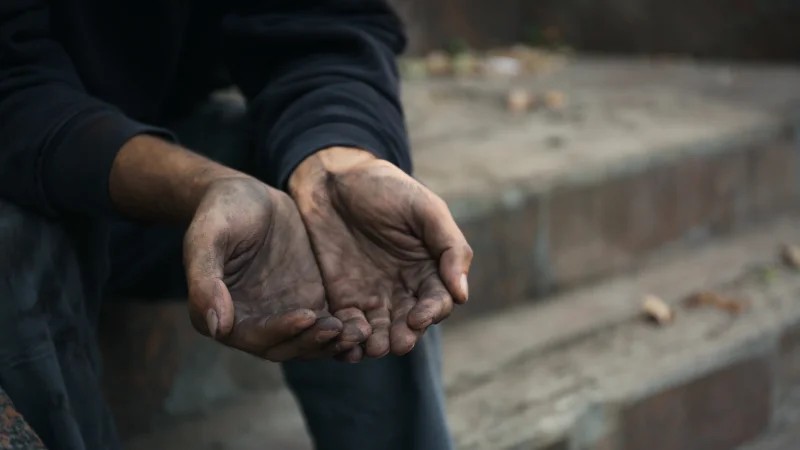
Bangladesh is confronting a markedly difficult phase in its national trajectory. Poverty is increasing, and both long‑standing impoverished households and those newly fallen into poverty lack sufficient economic buffers to withstand shocks.
Nearly 62 million individuals live just above the poverty line, leaving them vulnerable to a single adverse shock that could push them back into destitution.
On Tuesday, the author received two reports in the mail, both issued from Washington, D.C. By coincidence, each report addressed the same critical issue: ensuring that government‑promised social‑safety‑net benefits reach the people who need them most.
The World Bank, in its flagship *Bangladesh Development Update*, and the food‑policy think tank IFPRI, in its policy note *Modernising Bangladesh’s Social Protection System*, have highlighted that Bangladesh’s fragmented social‑safety‑net programmes fail to adequately support their intended beneficiaries – the poorest of the poor.
In 2026 Bangladesh saw the number of people living below the poverty line rise for a fourth consecutive year, and officials have warned that a sizable share of the budget earmarked for the poor is being diverted to non‑poor recipients.
The impoverished population continues to face acute strain due to widespread unemployment, factory shutdowns, persistently high inflation and a cost‑of‑living increase fueled by successive hikes in energy prices.
The proportion of ultra‑poor people is projected to nearly double, rising from 5.9 % in 2022 to 10.1 % this year. Over the same four‑year period, the overall poverty rate is expected to increase from 18.7 % to 22.5 %.
An estimated eight million people fell into poverty between 2022 and 2026, with more than two million of them joining the ranks in the most recent year alone.
Bangladesh’s social protection system is now confronted primarily with issues of efficiency and coherence rather than the level of overall expenditure. For fiscal year 2027, the government earmarked Tk 1.44 trillion for social protection, representing about 2.1 % of GDP, but the share of spending that reaches the poor remains markedly low.
The IFPRI authors Akhter U. Ahmed and Md. Sadat Anowar, echoing the World Bank report, note that the system is plagued by extreme fragmentation and structural inefficiencies.
The government runs 90 social‑protection programmes spread across 25 ministries, each with its own eligibility criteria. This structure has produced duplicate beneficiary registers, significant coordination difficulties and elevated transaction costs.
Government employee pensions and agricultural subsidies together represent roughly 43 % of the total social‑protection budget, with the pension scheme for retired civil servants alone accounting for about 29 % of overall spending.
The 48 programmes officially classified as “pro‑poor” receive only about 39 % of the total social‑protection budget. Nearly 48 % of this allocation is concentrated in just four flagship transfers—the Family Card, the Old Age Allowance, the Widow and Destitute Women Allowance, and the Disability Allowance.
The distribution is highly uneven: the five biggest programmes account for roughly 67 % of the budget while serving only about 5.5 % of beneficiaries. Consequently, the remaining programmes are left severely under‑funded, delivering only minimal benefits and providing limited coverage to the people who need assistance most.
The impact of these systemic gaps is evident. The proportion of households reporting receipt of assistance rose from 24.6 % in 2010 to 37.6 % in recent years, yet half of the poorest households remain entirely outside any safety‑net programme.
Conversely, current transfers benefit 31% of people in the richest income quintile.
The share of total benefits reaching the bottom 40 percent of the population fell from 51 percent in 2016 to about 44 percent in 2022. At the same time, broad‑based energy and fertilizer subsidies provide substantial financial assistance but disproportionately benefit better‑off households.
Officials stress a pressing need to improve targeting, raise benefit amounts, broaden urban coverage and scale up successful programmes, while phasing out inefficient ones, in order to enhance the effectiveness of the social‑protection system in uplifting the poor.
Improving targeting and reducing benefit leakage could enable social‑protection coverage for poor households to be expanded without increasing the current budget.
Bangladesh should now review its entire social‑protection system. The government is urged to redesign and realign the programmes so that benefits are substantial, integrated and strictly targeted at the population segments most in need to withstand the current wave of economic shocks.
Stronger coordination, interoperable delivery systems and a shift away from untargeted subsidies are urgently needed to create a coherent social‑protection architecture.
Should the structural overhaul not be implemented, large budgetary allocations are likely to continue reaching inappropriate recipients. At the same time, the most vulnerable citizens will face growing difficulty coping with soaring inflation, a decelerating economy and widespread unemployment.
Bangladesh cannot afford support systems that consume substantial public resources without effectively protecting those most affected by economic shocks. The government must act now to strengthen and leverage its social‑protection framework so it can respond effectively to this period of heightened economic stress and external uncertainty.
Why it matters
Nearly 62 million Bangladeshis live just above the poverty line, making the failure of social protection systems a critical humanitarian and economic issue requiring immediate reform.