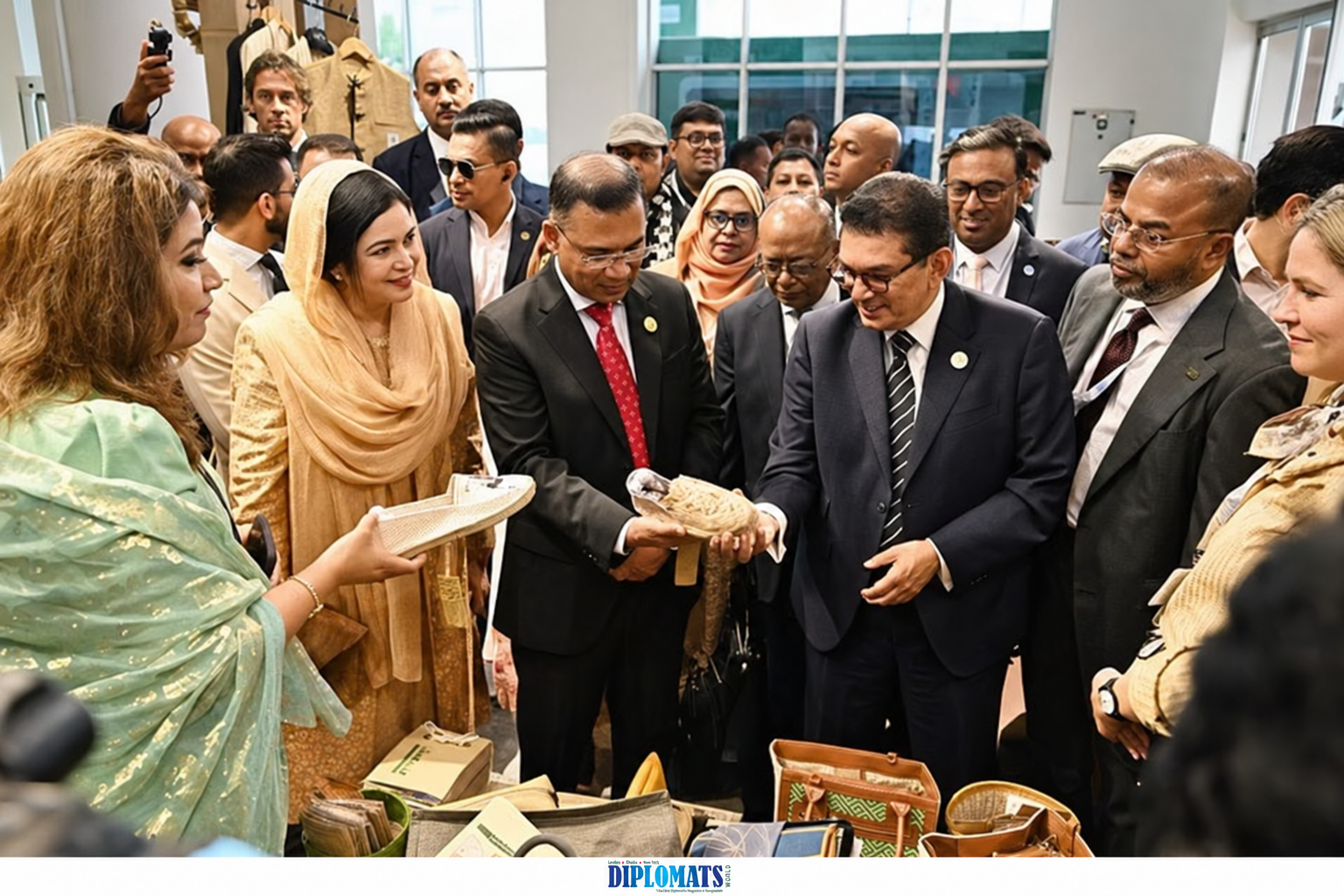
On Thursday, 12 November 2026, Bangladesh Prime Minister Tarique Rahman arrived at the Jute Pavilion in the Green Zone of the 31st session of the United Nations Framework Convention on Climate Change (COP31) in Antalya, Turkey, at around 10:00 a.m. local time. He was accompanied by First Spouse Dr. Zubaida Rahman, Foreign Minister Dr. Khalilur Rahman, Minister for Forest and Environment Abdul Awal Mintoo, and State Minister for Foreign Affairs Humaiun Kobir, among other senior officials.
The delegation was received by State Minister for Foreign Affairs Shama Obaed Islam and State Minister for Environment, Forest and Climate Change Shaikh Faridul Islam, who escorted the Prime Minister into the pavilion. The visit formed part of the Prime Minister’s official itinerary during Bangladesh’s broader participation in COP31.
Inside the pavilion, officials displayed 129 types of jute products, ranging from bags and small accessories to shoes and blazers. They emphasized the fibre’s environmental benefits, positioning jute as a natural, biodegradable alternative to plastic and a potential driver of green trade for Bangladesh.
International visitors to the pavilion expressed keen interest in the showcased items, with several delegations indicating a willingness to import Bangladeshi jute products. The exhibition underscored Bangladesh’s ambition to expand its jute exports in line with global sustainability goals.
A group of University of Chicago students touring the pavilion met the Prime Minister. When asked about their interest, they said they were eager to learn more about Bangladesh’s eco‑friendly jute initiatives. The Prime Minister replied, “Let us work together to ensure a healthy and safe world,” urging collective action on environmental protection.
The Prime Minister also highlighted the broader significance of the visit, noting that promoting jute aligns with Bangladesh’s climate‑action commitments and supports economic diversification. He called for increased international collaboration to scale up sustainable fibre production.
Bangladesh’s participation in COP31, including this pavilion visit, reflects the country’s strategy to combine climate diplomacy with trade promotion, leveraging its status as a major jute producer to advance both environmental and economic objectives.
The visit concluded with the Prime Minister delivering remarks at the High‑Level Segment of the conference, reinforcing Bangladesh’s commitment to climate resilience and sustainable development.
Why it matters
The visit showcases Bangladesh’s push to promote eco‑friendly jute as a climate‑friendly alternative to plastics, boosting trade and environmental goals.