This past week, the author attended an event in Dhaka described as a watershed moment for Bangladesh, as the country formally joined a global movement to rein in methane emissions, particularly from the agricultural sector.
With the next UN Climate Change Conference, COP31, scheduled for November 9-20, 2026, the timing could not be more opportune. This strategic move allows Bangladesh to arrive on the global stage with a powerful, demonstrable commitment to curbing greenhouse gas emissions.
On Tuesday, Bangladesh formally joined AcceLER, which stands for Accelerating Scaling of Low-Emissions Rice in Southeast Asia. The initiative is designed to help countries plan, implement, and track effective methane mitigation measures.
Through a combination of suitability mapping, robust monitoring systems, remote sensing, and institutional capacity building, several major Asian rice-producing economies—including Thailand, Vietnam, Cambodia, the Philippines, and Indonesia—are already benefiting from the program. Now, Bangladesh joins their ranks, aiming to substantially reduce the climate impact of its paddy fields.
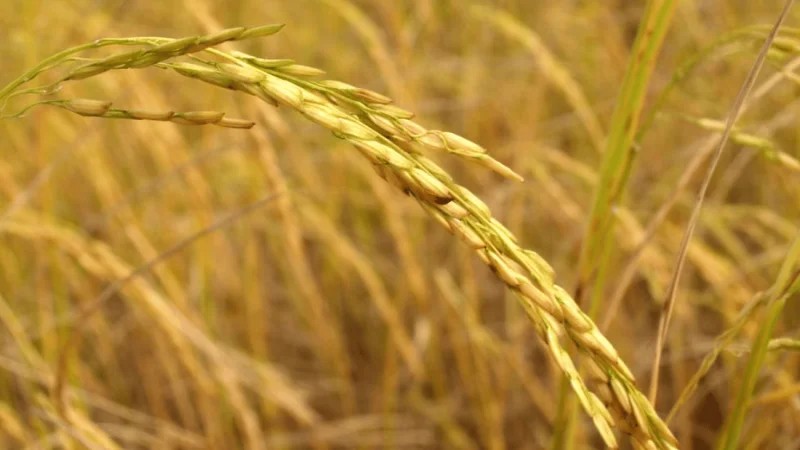
Rice occupies three-fourths of Bangladesh’s cultivated land and remains fundamental to national food security, rural employment, and smallholder livelihoods.
The irrigated Boro rice ecosystem serves as the nation's most productive agricultural system, accounting for approximately 55% of domestic production from December to May. However, its heavy reliance on groundwater and prolonged flooding renders it a significant source of methane emissions.
Methane emissions from rice cultivation in Bangladesh are estimated at 32.4 million metric tonnes of carbon dioxide equivalent (MtCO₂e), establishing rice as one of the nation's primary sources of methane.
To put this figure into perspective, 32.4 MtCO₂e is roughly equivalent to the annual greenhouse gas emissions of 7.7 million gasoline-powered passenger vehicles, the annual electricity consumption of 6.3 million homes, or the amount of carbon sequestered by 535 million tree seedlings grown for a decade.
Methane is an extremely potent super-pollutant that is 86 times more powerful than carbon dioxide over a 20-year period, meaning that curbing these emissions can help prevent catastrophic climate change.
Methane is responsible for approximately 30 percent of recent global warming. Furthermore, it contributes to the formation of ground-level ozone, which harms human health and reduces crop yields. Cutting these emissions represents one of the fastest and most effective ways to slow the rise in global temperatures.
The primary driver of these high emissions is the continuous presence of irrigation water in rice fields. Over the decades, well-intentioned initiatives—such as canal excavation and heavily subsidized irrigation water pumped through tube wells—have entrenched farming practices that rely on prolonged flooding. Continuously flooding croplands during the dry Boro season has come at a considerable environmental cost.
Today, this agricultural system faces growing challenges from declining groundwater levels, soaring irrigation costs, high energy consumption, and severe climate risks.
Fortunately, practical solutions exist. Water-saving practices, such as alternate wetting and drying, improved nutrient management through techniques like fertilizer deep placement, direct seeded rice, and short-duration rice varieties, can significantly reduce emissions by limiting the prolonged oxygen-deprived conditions that encourage methane-producing bacteria.
Instead of keeping fields permanently flooded, alternate wetting and drying (AWD) requires farmers to allow water levels to fall periodically, exposing the soil to air. The resulting influx of oxygen suppresses methane production, significantly reducing emissions while conserving increasingly depleted groundwater resources.
Historically, methane emissions have been difficult to measure, making it challenging for governments to take effective action. Today, advanced satellite technologies offer greater transparency, helping authorities identify emission sources more accurately.
Because about 60% of methane emissions originate from human activities, access to open and reliable data is essential for policymakers, scientists, and industry leaders to collaborate across borders.
Building on these technological advances, the International Rice Research Institute (IRRI) recently convened government agencies, researchers, and development partners in Dhaka to enhance Bangladesh's capacity for measuring, reporting, and verifying agricultural greenhouse gas emissions.
Dr. Humnath Bhandari, who has led IRRI's operations in Bangladesh for many years, emphasized that digital MRV offers a promising, affordable, and accurate method for tracking progress on a large scale. He noted that by mapping the extent of farmer adoption of low-methane technologies, authorities will be able to design more targeted and effective interventions.
Bangladesh can draw inspiration from its neighbours. On the sidelines of the Dhaka event, Dr Bjoern Ole Sander, an IRRI senior scientist and climate change mitigation team lead who heads the institute's operations in Thailand, shared how the organization has helped millions of Thai farmers transition to low-emission rice production across 100,000 hectares in six provinces.
While Thailand is a net rice exporter, Bangladesh remains structurally vulnerable. Despite being the world's third-largest rice producer, the country frequently relies on imports because of its high per capita rice consumption and a population that grows by around two million people annually. This vulnerability is compounded by crop losses caused by floods and other disasters.
Scaling up science-based, transparent low-emission practices is no longer optional; it is a priority for the country's long-term food security and climate resilience. By successfully implementing the AcceLER initiative, Bangladesh stands to reap significant benefits:
Transitioning to cleaner farming practices could also contribute to more liveable cities and healthier, more resilient communities across the country. The tools are available, the framework is in place, and the timing is right.
Bangladesh's agricultural extension services now face the challenge of developing the capacity and commitment required to move practical water‑saving technologies from laboratories into farmers' fields.
Why it matters
Joining the AcceLER initiative enables Bangladesh to curb major agricultural greenhouse gas emissions and protect vital groundwater resources ahead of COP31.