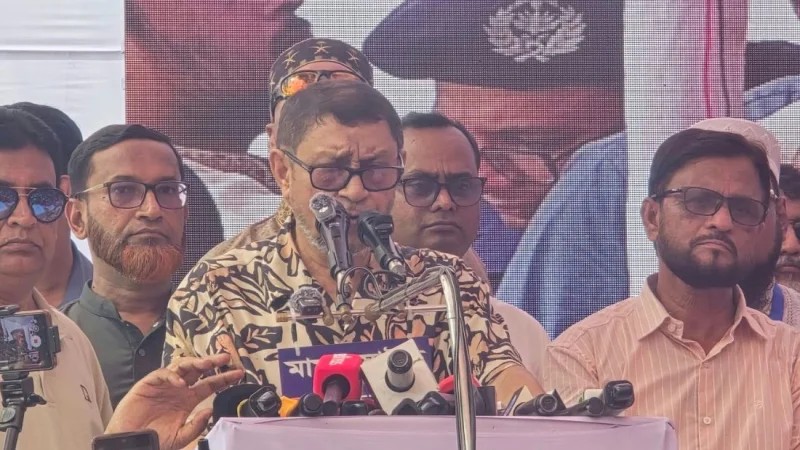
Health and Family Welfare Minister Sardar Md Sakhawat Hossain has announced that the government will implement sweeping reforms across the country’s health sector within the next two years to ensure patients no longer need to travel to India for treatment. Speaking at the inauguration of a primary healthcare programme in Kasba upazila of Brahmanbaria on Wednesday, the minister emphasized that the administration wants citizens to receive quality care at home.
The initiative, jointly organized by the Rahman Development Foundation and the Shakti Foundation, is designed to deliver primary healthcare services to residents across the Kasba and Akhaura upazilas. During his address, Minister Hossain criticized the previous regime, alleging that widespread corruption and tender manipulation severely crippled medical infrastructure and left expensive equipment unusable due to severe manpower shortages.
Highlighting the current administration's approach, the minister stated that Prime Minister Tarique Rahman’s government maintains a zero-tolerance policy toward corruption. As part of the upcoming overhaul, every upazila health complex is slated for an upgrade to 151 beds, complete with modern pathology facilities, kidney dialysis services, and dedicated 20-bed units for mothers and children.
To accelerate the infrastructure development, tenders valued at Tk16,000 crore for upazila and union-level facilities as well as family welfare centers will be floated within 15 days, with construction targeted for completion in two years. Additionally, the government plans to recruit 41,391 healthcare workers this year, including nurses and midwives, and introduce advanced robotic surgery at Dhaka Medical College Hospital.
Addressing regulatory enforcement, the minister warned private clinics against operating within one kilometer of government hospitals and threatened action against violators. He also committed to resolving local doctor shortages in Kasba and Akhaura within a week, warning that absent physicians risk termination.
Why it matters
The sweeping two-year healthcare overhaul directly addresses chronic medical infrastructure deficits and aims to curb costly patient outflows to foreign countries.