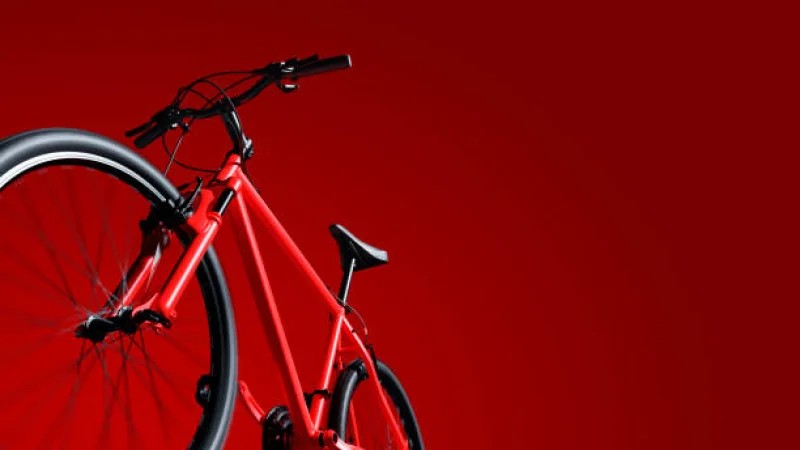
Workers on factory floors throughout Bangladesh are currently welding metal frames that will never be used in garment sewing. The finished products leave the plants on two‑wheel carts bound for ports such as Hamburg and Vienna. The items receive little attention outside the sector, a fact that some observers suggest warrants greater awareness.
Bangladesh's economy remains heavily reliant on a single sector, with garments accounting for 84 percent of the country's export earnings during the last fiscal year, according to figures presented to parliament by the commerce minister this June. The nation of 170 million people has constructed its entire trading identity around this industry, which has provided comfort for four decades, though it will not suffice for the next one.
There is a smaller story here that sits quietly beside the big one that needs a closer look. Quite remarkably, Bangladesh made a handsome $116.44 million from bicycle exports in fiscal year 2024/25. This is a skyrocketed figure with a jump of 4% over the year before. Germany alone bought $34.39m worth of Bangladeshi bicycles. Eurostat now places Bangladesh as the third largest bicycle supplier to the European Union and the eighth largest in the world.
The recovery is notable for the manner in which it unfolded. Export values had risen to $168 million during the pandemic‑driven cycling surge, but then halved after European retailers cleared excess stock and the conflict in Ukraine further dampened demand.
Many export sectors never recover after a decline of that magnitude. Bangladesh’s bicycle manufacturers, however, have rebounded, illustrating the resilience of the industry rather than the effect of any single strong year.
Europe is also moving in a direction that suits us, with the European Cyclists' Federation expecting the continent to sell 30 million bicycles a year by 2030, which is close to 10 million more than today. This growth is driven by city planners redesigning streets and younger buyers choosing bikes over cars, not because of fashion.
A policy tailwind is also working in our favour. The European Commission renewed its anti‑dumping duties on Chinese bicycles in January 2025, extending the measure to include electric bicycles, and the decision by Brussels has benefited Bangladeshi exporters more than most of the United Kingdom’s domestic industrial policy combined.
At this juncture, the celebration must be tempered. Protections issued under another jurisdiction’s trade ruling are not permanent and will be subject to review.
Political dynamics in Brussels are subject to change, and a far‑reaching deadline is already looming. Bangladesh had been scheduled to graduate from least‑developed‑country status on 24 November 2026, but its government has now asked the United Nations to postpone that transition until 2029.
The World Trade Organization has warned that Bangladesh could lose close to $8 billion a year in export earnings when its current trade preferences expire, while the United Nations Conference on Trade and Development estimates the potential loss could be as high as $17.5 billion.
The majority of that exposure is linked to garments. This should continue to concern the bicycle industry, as a central weakness remains unaddressed.
Bangladesh continues to import the majority of the costly components used in bicycles it exports. Annual demand for freewheels and sprockets is estimated at roughly 3.5‑4 million and 5‑5.5 million units respectively, most of which are met through imports, even though the Trade and Tariff Commission has found that domestic value addition in these parts is already close to 40%.
Imported gear and chain increase production costs, sending the margin directly to foreign suppliers. While garments can remain viable on imported fabric because low labor costs offset the loss, bicycles cannot rely on the same approach.
A comparable bottleneck was tackled a decade earlier when motorcycle assemblers faced the same challenge; in 2016 the government reduced the import duty on completely knocked‑down (CKD) units by 25 percentage points.
Within a few years, local manufacturing and assembly satisfied 96 % of domestic motorcycle demand, ending the near‑total reliance on imports. The shift required no new economic model; it followed a revision of the tariff structure, to which investors promptly responded.
The same measures could be applied to the bicycle sector. Reducing tariffs on bicycle components would enable domestic suppliers to compete without relying on imports, while extending bonded‑warehouse access—currently available to garment factories—to bicycle component manufacturers would further support the industry.
Trade diplomacy with Brussels must begin now, while the graduation date is still being negotiated, officials said. They warned that waiting until the clock runs out would weaken their negotiating position.
Bangladesh has demonstrated on two occasions that it can attract foreign buyers by offering quality rather than relying solely on low‑cost labour. The garment sector proved this first, and the bicycle industry is now replicating the achievement, albeit on a smaller yet genuine scale.
The choice before us is whether to view this as a pleasant accident or as a pillar that our economy has required since long before anyone in Frankfurt observed our welders.
"We built one industry because building two felt unnecessary," the source section states, adding that "that comfort is running out of road faster than we think." The text notes that bicycles alone will not support an economy of 170 million people, but they serve as proof of the ability to compete on something other than a sewing machine, provided there is investment in the parts before the deadline arrives rather than afterward.
Nazma Sultana holds a key strategic position at Akij Bicycle & Engineering Limited (ABEL).
Why it matters
Expanding the domestic bicycle manufacturing base and securing favorable trade terms are essential for diversifying Bangladesh's export earnings ahead of LDC graduation.