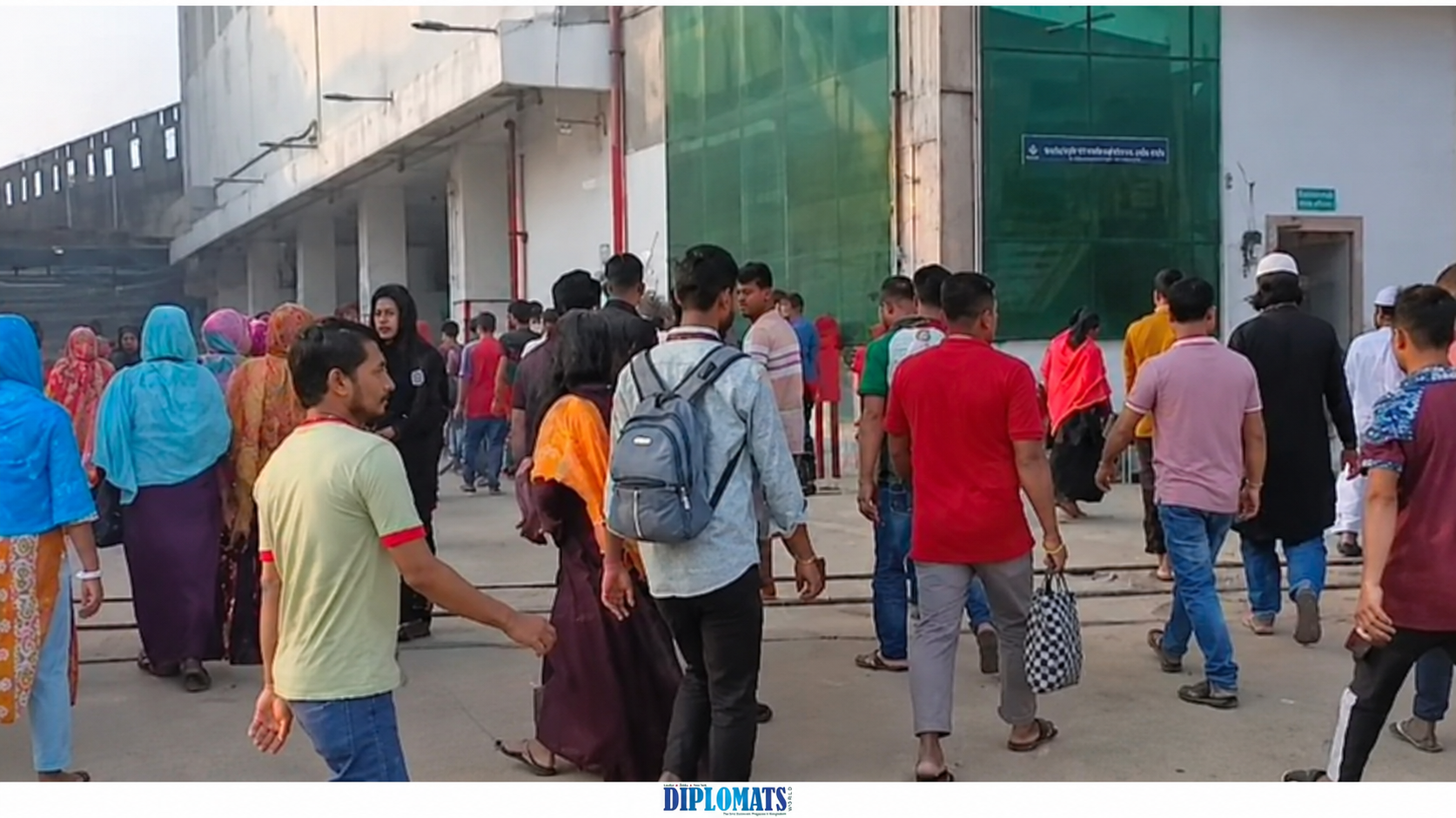
Normalcy has largely returned to garment factories in Savar and Ashulia, with workers resuming their duties at the majority of facilities on Sunday morning following a period of tension and unrest.
A visit to several industrial areas found workers arriving on time, machinery running, and production actively underway. Despite the overall improvement, production remains suspended at a portion of the facilities in the region.
According to the Industrial Police, more than 50 factories across the industrial zone remain closed due to worker unrest, while employees at five additional factories have reported for work but have not yet commenced operations. The remaining establishments are functioning normally.
Mohammad Mominul Islam Bhuiyan, superintendent of Industrial Police-1, stated on Sunday morning that the situation across Savar, Ashulia, and Dhamrai was stable. He noted that out of approximately 800 garment factories in the area, factory owners kept more than 50 shut for various reasons.
“Apart from the five factories where workers had not started work, operations were continuing as usual elsewhere. No incidents of unrest had been reported,” Bhuiyan said, emphasizing that stakeholders share a common goal of maintaining sector stability.
Khairul Mamun Mintu, legal affairs secretary of the Bangladesh Garments and Sweaters Workers Trade Union Centre, confirmed the return to stable conditions on Sunday morning.
“Factories that were previously closed remain shut, but otherwise, the situation is stable. Workers have returned to their jobs,” Mintu said. He added that operations were suspended under the 'no work, no pay' principle at nearly 50 facilities pursuant to Section 13(1) of the Labour Act.
Meanwhile, law enforcement agencies remain on heightened alert across the region to prevent further disruption. Additional police and security personnel continue to be deployed at key locations and outside factory gates to safeguard ongoing operations.
Why it matters
The resumption of operations in major garment manufacturing zones is critical for maintaining stable export supply chains and labor relations in Bangladesh.