Initiative aims financial inclusion, to include rickshaw pullers and also street vendors
Bangladesh Bank will introduce person-to-person transactions through Bangla QR in November, enabling individuals such as rickshaw pullers and cobblers to send and receive funds using their own QR codes, according to Bangladesh Bank governor Md Mostaqur Rahman on Saturday.
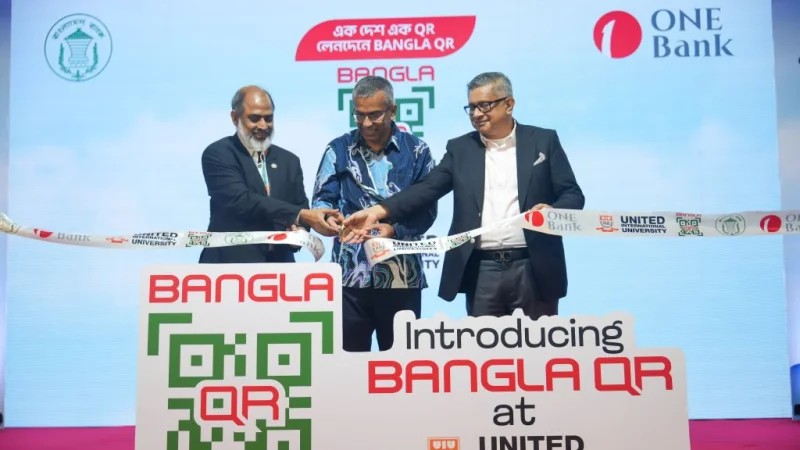
He made the announcement at an event marking the launch of Bangla QR payments at United International University (UIU) in Dhaka, in partnership with ONE Bank PLC.
The initiative aims to expand digital payments among young people and make financial services more accessible, supporting the central bank's goal of building an inclusive and increasingly cashless economy.
The governor also said Bangla QR was being implemented in four phases.
The first measure involved introducing regulatory directives that made the use of Bangla QR mandatory starting July 1, while the second focused on testing the system's capacity to handle large volumes of transactions across interconnected payment service providers.
The third phase, launched on October 1, focuses on promoting wider adoption.
Charges for interoperable transactions between participating institutions have also been waived, regardless of the transaction amount, he said.
The fourth phase, which is scheduled to begin in November, will allow individuals to transfer money directly to one another utilizing Bangla QR codes.
Mostaqur stated that the system's average daily transaction volume grew from Tk37 crore in the initial week of June to approximately Tk180 crore in the final week of September, marking a more than fourfold increase.
However, he described the progress as merely an initial step, noting that daily transactions totaling around Tk3,000 crore would signal that the system had achieved a more meaningful level of adoption.
He also highlighted the government's digital public infrastructure initiative, which aims to integrate digital identity, digital payments, and data exchange in order to simplify access to banking and other public services.
ONE Bank managing director Muhit Rahman stated that the introduction of interoperable transactions had significantly increased activity through the bank's mobile financial services.
Monthly transaction volumes, which previously stood at around Tk2 crore, increased to Tk15-20 crore following the introduction of inter-institutional transactions from July 1, he said.
Rahman stated that transactions of up to Tk2,000 made through Bangla QR would be free of charge for both customers and merchants under the applicable arrangement.
ONE Bank, however, would provide the service free of charge to UIU students, he added.
He said that the wider adoption of digital payments could bring people outside the formal financial system into banking services. Transaction records could also help financial institutions better understand customers' financial behavior and potentially facilitate future lending and investment services.
Rahman added that the growing use of digital payments could transform traditional branch-based banking over the next three to five years.
As part of the initiative, United International University (UIU) has been working to establish a cashless campus, bringing teachers and students under the service over the past two weeks, with plans to expand participation further.
UIU Vice-Chancellor Md Abul Kashem Mia announced that the university is introducing dynamic Bangla QR codes for individual students. He stated that this system will allow students to pay tuition fees and other charges more conveniently while also reducing the risk of payment errors.
Students will additionally be able to share their QR codes with family members, which will enable those family members to make payments through banks. Furthermore, QR-based payments have been introduced at campus food courts, allowing students to pay their bills digitally.
The event featured demonstrations at participating business stalls, giving students and guests the opportunity to experience Bangla QR payments firsthand.
Bangladesh Bank governor Mostaqur conducted an interactive session with students focused on digital payments, financial innovation, and the future of banking.
ONE Bank and UIU stated that the partnership seeks to boost awareness and adoption of digital payments among young people, while also contributing to a more inclusive and interconnected financial ecosystem.
Why it matters
The launch of person‑to‑person Bangla QR payments expands financial inclusion for low‑income workers and advances Bangladesh’s cashless economy goals.