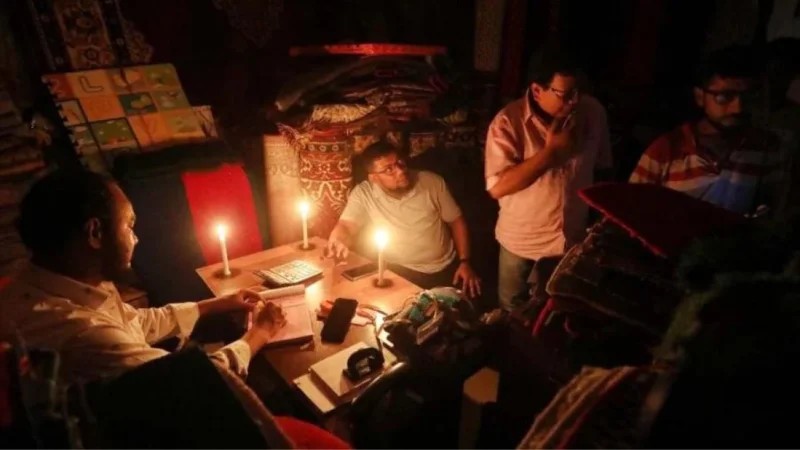
As many as 35 power plants remain shut across Bangladesh, pushing load shedding to 2,500MW amid a worsening fuel shortage.
The simultaneous shutdown of so many plants has raised concerns. Bangladesh Power Development Board (BPDB) officials said fuel shortages, particularly inadequate gas supplies, are the main reason behind the closures.
Gas-fired plants cannot generate electricity at full capacity due to insufficient gas supplies. Liquid-fuelled plants face a similar problem, as operating them requires substantial financial resources.
A Power Division official said electricity generated from furnace oil currently costs around Tk25 per unit, compared with Tk13-14 from coal and about Tk7 from gas.
“Gas remains the cheapest source of electricity, but we cannot ensure adequate supplies despite the demand,” the official said.
He said Bangladesh currently receives around 1,600 million cubic feet of gas per day from domestic sources and another 1,000mmcfd from imported LNG. Supplies from either source cannot be increased overnight, as no significant new gas reserves have been found onshore and the country lacks sufficient infrastructure to increase LNG imports.
On October 7, gas-fired power plants had a combined demand of 2,524mmcfd, against a supply of only 895mmcfd.
Officials said increasing gas supplies to power plants could worsen shortages in the industrial sector and disrupt exports, making it difficult to divert more gas to electricity generation.
According to BPDB data for October 7, six plants or units were offline due to gas shortages. All four units at Ghorashal, with a combined capacity of 1,153MW, were shut.
The Bheramara 410MW, Baghabari 71MW and three Sirajganj units with a combined capacity of 225MW were also offline. Together, these plants have a total capacity of 1,395MW.
Three liquid-fuelled plants, Gopalganj (100MW), Chowmuhani (113MW) and Chapainawabganj (100MW), were also not generating power, with a combined capacity of 313MW.
Six plants or units were unavailable due to maintenance, including Siddhirganj (210MW), Tongi (80MW), Ashuganj East (400MW) and two Barapukuria units (250MW and 274MW), with a combined capacity of 1,339MW.
The BPDB was also not taking power from Haripur (360MW), Meghnaghat (450MW) and Bheramara (20MW) as their contracts had expired. The three plants have a combined capacity of 830MW. The 100MW Shahjibazar gas turbine plant was shut due to a mechanical fault.
Haripur 32MW, Chitttagong 420MW, Shikalbaha Peaking 150MW, Sylhet 20MW and Saidpur 150MW plants were also out of operation.
All units of the coal-fired Barapukuria power plant were shut as well.
The Power Grid Company of Bangladesh (PGCB) said load shedding stood at 2,040MW at 1:00am on October 7 before falling to 859MW at 8:00am. It later rose to 1,161MW at 4pm.
Former Power Cell Director General BD Rahmat Ullah said Bangladesh had failed to follow proper planning while expanding fossil-fuel-based power plants.
“As a result, we have power plants but cannot operate them due to fuel shortages,” he said.
“Since our primary fuel resources are very limited, there is no alternative to shifting to renewable energy.”
He said many countries now generate solar power during the day and store it in batteries for use at night.
“Bangladesh can do the same. The government needs to move forward with proper planning and a clear course of action,” he added.
Why it matters
Widespread power outages and 2,500MW load shedding highlight Bangladesh's urgent need to diversify energy sources and improve fuel supply infrastructure to sustain economic stability.