Two World Bank reports, published less than 11 months apart, illustrate the increasing fragility of Bangladesh's development gains.
The Poverty and Equity Assessment released in November 2025 documented a decline in the national poverty rate, which fell from 37.1 % in 2010 to 18.7 % in 2022.
The Bangladesh Development Update, published on 6 October 2026, notes a reversal in poverty trends, with the national poverty rate estimated at 22.5 percent for fiscal year 2025‑26 and projected to rise to 22.8 percent in fiscal year 2026‑27.
The most recent update estimates that roughly 2.1 million additional individuals fell below the international poverty line of $3 per day during fiscal year 2025‑26.
The metric differs from the national poverty rate. Both indicators signal a decline in household welfare, yet neither is derived from a fresh household survey. Recognising this distinction is crucial when evaluating government performance using these figures.
The key issue is whether Bangladesh can pursue accountability without jeopardising productive businesses and the livelihoods they provide. When political retaliation harms factories or blocks legitimate commerce, workers bear costs that have not been imposed by any court.
A balanced assessment must note that the crisis did not start in August 2024; earlier inflation, foreign‑exchange shortages and import restrictions had already weakened the economy.
Banking vulnerabilities have accumulated over many years because of weak oversight, related‑party lending and governance failures. The poverty assessment also indicated that growth has become less inclusive since 2016. Recent global energy disruptions have added further pressure.
Nevertheless, pre‑existing conditions do not relieve the government of accountability. Authorities should be evaluated on whether their measures merely reflect existing shortcomings or exacerbate them.
The World Bank has identified financial fragility, energy constraints, weak revenue mobilisation and prevailing uncertainty as barriers to economic recovery. It adds that protecting lawful business activity and maintaining public order are essential components of an effective response.
Economic growth fell from 5.8 percent in fiscal year 2022‑23 to 4.2 percent in FY 2023‑24, slipped further to 3.5 percent in FY 2024‑25 and is projected at 3.4 percent for FY 2025‑26. The slowdown therefore began during the Awami League regime.
The fiscal year 2025‑26 encompasses the tenure of both the interim administration and the newly elected government, which assumed office in February 2026. Assigning the entire year’s performance to either administration would misrepresent the chronological sequence.
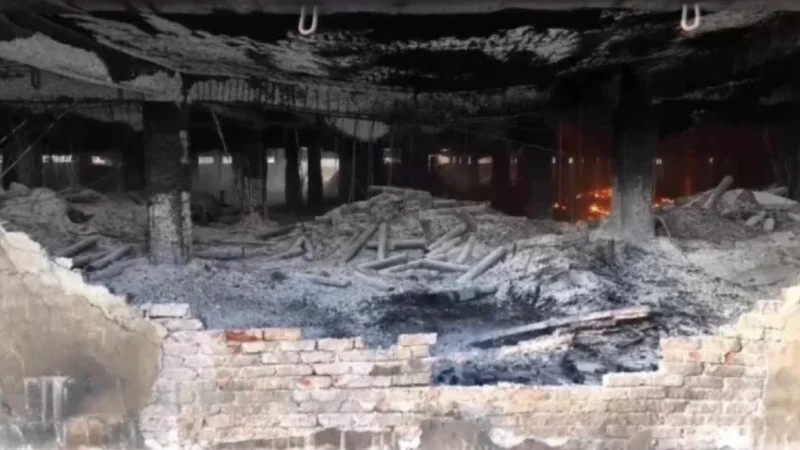
Nevertheless, the post‑August 2024 destruction of industrial assets warrants close examination. The looting and arson of Gazi Tires in Rupganj on 25 August 2024 highlighted a troubling failure to safeguard a company linked to a former minister.
Reports of missing people must be investigated carefully and should not be presented as a confirmed death toll. The destruction itself, together with its consequences for employment, provides sufficient grounds for concern.
A Prothom Alo report published on March 5 2025 recorded 95 permanent factory closures across major industrial areas during the preceding seven months. The closures affected 61,881 workers.
The analysis noted that the causes extended beyond political violence, citing financial distress, a shortage of orders, attacks on businesses with political ties and owners who have gone into hiding. The report recorded 33,244 jobs lost at 14 factories within Beximco Industrial Park; these figures are already incorporated in the overall total and should not be added separately.
The evidence under review bolsters criticism that protection measures have been insufficient and that industrial activity has been disrupted. Nonetheless, it does not prove that every plant closure was the result of retaliation. Preserving this distinction sharpens the argument by directing scrutiny toward failures that authorities could reasonably have prevented or mitigated.
The owner accused of corruption must be investigated, face asset recovery where justified, and be afforded a fair trial. It was stressed that employees, suppliers and customers should not automatically lose their livelihoods or contracts.
Where legally permissible and commercially feasible, professional administration or restructuring can preserve a viable enterprise while courts determine liability. Such arrangements must protect creditors and prevent the concealment or diversion of assets.
The preservation of employment should not be used as a justification for using public funds to rescue every indebted conglomerate. Some companies are insolvent or depend on privileges that cannot be sustained.
The stated aim is to ensure an orderly restructuring, transparent decision‑making and the payment of workers’ lawful dues. Authorities emphasised that political affiliation must not grant immunity nor replace the need for evidence.
Achieving the objective will depend on decisions made by individual enterprises. Authorities must differentiate between funds suspected of being criminal proceeds and those required for legitimate business activities. Any imposed restrictions should be justified, proportionate and subject to review.
Workers need clear information on wages and compensation, while lenders require reliable financial statements and a viability assessment.
Without this discipline, a campaign against wrongdoing can spread losses throughout an entire supply chain and undermine confidence in legitimate enforcement.
The broader deterioration in public order reinforces this concern. In its year-end 2025 reporting, the organisation Ain o Salish Kendra recorded at least 197 deaths from mob violence during that year and reported at least 293 such deaths since the interim administration began.
The latter was a cumulative figure reported before that administration ended, rather than a final count for its entire tenure. These deaths demonstrate a serious failure of protection, although they cannot all be classified as political retaliation.
A January 2025 report by Human Rights Watch also documented the resurgence of abusive security practices and reprisals against individuals perceived to support the Awami League. The organization's warnings regarding arbitrary arrests and indiscriminate criminal complaints highlight the critical importance of upholding due process.
Accountability loses credibility when allegations supplant investigation or when individuals are treated as guilty by association.
Economic consequences arise through identifiable channels. Damage to factories disrupts production and deliveries, while uncertain legal treatment may discourage lending and investment. Furthermore, workers who lose wages reduce their spending, which in turn affects shops, transport operators, and other local businesses.
These mechanisms provide compelling reasons to protect enterprises, although the World Bank’s aggregate figures do not quantify the distinct contribution of political retaliation.
Investment indicators are concerning, as private sector credit growth has fallen to its lowest level in 33 years. Additionally, net foreign direct investment declined by 15% in FY 2025-26, while new equity investment dropped by 70.3%.
Weakness in the financial sector, energy shortages, and global conditions also influence these outcomes. These figures serve as warning signs of a challenging investment environment, rather than evidence of a single political cause.
The earlier poverty assessment recorded nearly two million fewer employed people between 2023 and 2024 and projected a further decline of 0.8 million in 2025. That projection should not be treated as a subsequently verified outcome, though its broader message remains relevant: weakening employment and purchasing power threaten households with limited capacity to absorb shocks.
There are also achievements to acknowledge. Remittances reached $35.6 billion in fiscal year 2025-26, reserves improved, and average inflation eased from 10 percent to 8.7 percent.
More transparent recognition of problem loans is necessary, although the reported non-performing loan ratio of 33.2% in June 2026 demonstrates the scale of the remaining repair effort. Macroeconomic stabilization is valuable, but it must translate into productive investment and employment.
The elected government now bears responsibility for recovery. It should protect viable firms through lawful restructuring, investigate industrial arson regardless of political affiliation, and review cases through independent scrutiny of the evidence.
Bank restructuring requires credible deadlines and a fair allocation of losses. Reliable energy supply and stronger revenue collection should also form part of the recovery agenda.
Households need protection while these reforms take effect. About half of the poorest remain outside social protection programs. The World Bank estimates that consolidating food subsidies and combining the Family Card with better targeting of existing cash programs could lift millions out of poverty.
Bangladesh need not choose between justice and jobs; it must pursue justice through institutions that safeguard public funds and lawful livelihoods.
The promise of dignity after the uprising cannot be fulfilled if ordinary workers repeatedly bear the costs of their employers' politics.
The writer is a US-based policy analyst and freelance consultant on financial risk management.
Why it matters
The findings underscore that weakening employment and rising poverty threaten household stability, requiring policymakers to balance accountability with the protection of lawful businesses and jobs.