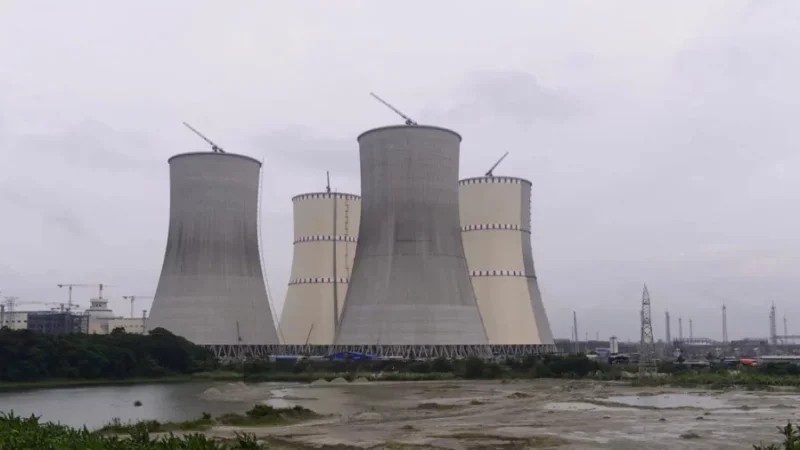
The Rooppur Nuclear Power Plant (RNPP) is set to begin the power start-up phase likely this October, marking a key step toward generating electricity from the country’s first nuclear power facility.
Once the reactor's output reaches 35 percent of capacity, supply to the national grid will begin. Officials state that, if everything goes according to plan, approximately 300 megawatts (MW) could be added to the grid in December.
A responsible source at the Nuclear Power Plant Company Bangladesh Limited (NPCBL) told the Dhaka Tribune that the plant's start-up at zero to 1% power is likely to begin on October 25. According to the source, once output reaches 35%, 300MW can be supplied to the national grid, following standard procedures.
“But numerous tests must be carried out to clear each stage,” the source said. After every increase in power, all parameters must be checked to ensure they are within limits.
According to sources, it usually takes about 40 days to reach 35% power after start-up begins. The timeline could stretch if any test fails along the way.
According to sources, if everything proceeds as planned, the facility could be prepared to begin production during the final week of November or alternatively in December.
Tests on the B-2 fission reaction are currently underway. Once these tests are completed and subject to approval from the Bangladesh Atomic Energy Regulatory Authority (BAERA), Stage-C, which involves the power start-up, will begin shortly.
Stage-D, or trial operation, will follow next. During this phase, the plant will be tested through trials to establish that it can operate at full capacity. Power generation will be raised and lowered to test the grid’s capacity to absorb it, and the plant will also be shut down briefly at times for testing.
Stage-D is expected to take approximately 10 months. During this period, the operators of the Rooppur nuclear power plant will work alongside the Russian contractor to build up their skills.
According to the sources, the plant is currently in the physics start-up stage, with every piece of equipment being tested at very low thermal power. Thermal power will then be increased to spin the turbine, and electricity generation will begin gradually.
Power will be increased step by step once everything checks out in the physics tests and BAERA gives its approval. BAERA’s permission will also be required for spinning the turbine and for generating electricity. At that point, officials will check whether the turbine and the generation process are functioning properly.
An official responsible for the construction project told local media that if they follow the ideal programme, they hope the plant can go into production by December. However, the official added that if they get stuck on any test at the last moment, it could take longer.
Some individuals involved in the project expressed doubt regarding the December schedule, noting that establishing a fixed start date for a nuclear plant is extremely difficult and that even a minor issue could force them to restart the work from scratch. Despite these concerns, December remains the target.
Sources reported that a delegation from the International Atomic Energy Agency (IAEA) is organising a training workshop to help ensure safety and emergency preparedness at Rooppur.
The International Atomic Energy Agency’s Emergency Preparedness Review mission will take place in Bangladesh between November 8 and November 18, assessing the nation’s readiness for nuclear emergencies.
Md Anwar Hossain, secretary of the Ministry of Science and Technology, told the Dhaka Tribune that elevating Rooppur's emergency preparedness to international standards would require coordination among relevant agencies, trained personnel, clear written guidelines, and continuous radiation and environmental monitoring.
BAERA Chairman Mahmudul Hasan said an integrated emergency response framework should be established prior to the IAEA delegation’s visit, with clearly defined responsibilities for all parties, ranging from field first responders to national‑level decision‑makers.
Abul Khayer Md Akkas Ali, additional secretary of the Atomic Energy Division at the Science and Technology Ministry, said the government is committed to providing the necessary institutional support to ensure nuclear safety.
Posts, Telecommunications and ICT Minister and Science and Technology Minister Fakir Mahbub Anam said earlier that efforts are underway to supply around 300 megawatts from the first reactor at the Rooppur nuclear power plant to the national grid by November.
He said the 1,200MW mega project is a flagship project for Russia’s Rosatom, which is therefore giving it high priority. Experts sent three months ago are working round the clock, he added.
The minister also said a plan to load fuel into the second reactor is slated for around June next year.
Why it matters
The start‑up marks Bangladesh's first nuclear power contribution to regional energy security.