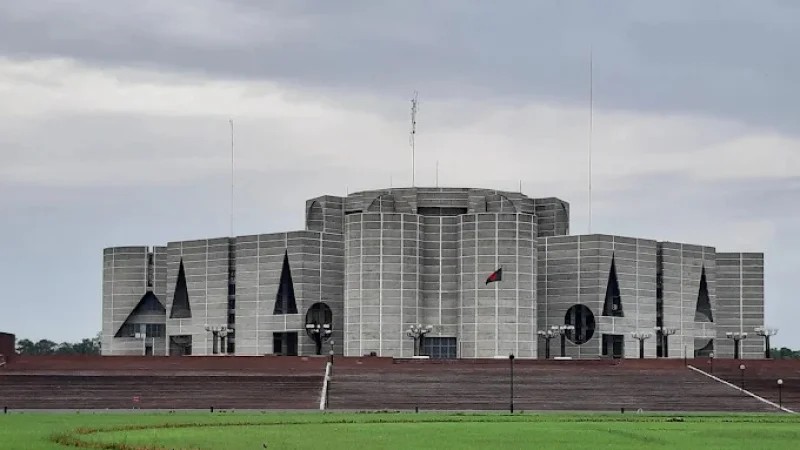
The Standing Committee on the Ministry of Education of the 13th National Parliament has recommended the introduction of an annual assessment system aligned with international standards. The committee stated that the move aims to improve the quality of education and transition away from artificial competition centered on pass rates.
At its first meeting, held at the National Parliament Building on September 10, the committee proposed a series of measures to ensure transparency in education spending, tackle irregularities and corruption, investigate declining secondary-level enrolment, strengthen teacher training and expand technical education.
Md Salim Bhuiyan, Member of Parliament and chairman of the committee, told Bangladesh Sangbad Sangstha (BSS) at the Secretariat yesterday that the previous government had focused on numerical indicators and pass rates rather than genuine educational quality.
"Prime Minister Tarique Rahman's government does not believe in this artificial competition. We want to ensure genuine quality in education in the country," he stated.
He stressed the need for annual assessments, a modern curriculum and evaluations of learning outcomes at three- or six-month intervals to bring students in line with international standards.
Further recommendations and details of the government's education roadmap will be presented at a press conference, he added.
Committee member Reza Kibria also emphasized setting specific annual benchmarks to ensure Bangladeshi students perform competitively in international assessments, particularly in mathematics and science.
Members proposed a long-term national education vision, modelled on Malaysia, aimed at preventing frequent changes to education policies, curricula and textbooks that occur after changes in government.
According to the meeting minutes, the government has proposed a budget of Tk57,301.68 crore for the Secondary and Higher Education Division for the 2026‑27 fiscal year. This amount represents a 42.7 % increase over the previous revised budget for the division.
The initiatives discussed included distributing laptops to approximately 40,000 students who achieved a Golden GPA in 2026 and bringing seven million female students under a Tk4,000 crore scholarship program to promote girls’ education and reduce dropout rates.
The committee also confirmed that outstanding dues had been transferred to the bank accounts of roughly 70,000 retired teachers and employees through the Electronic Fund Transfer (EFT) and iBAS systems.
In the initial phase, each teacher is receiving an average of Tk5 lakh.
The committee expressed gratitude to Prime Minister Tarique Rahman for allocating Tk2,000 crore in special assistance to address the crisis involving teachers' welfare and retirement benefits.
It recommended expediting MPO enlistment for eligible non-MPO institutions and long-serving teachers, reducing bureaucratic delays and investigating the significant decline in secondary-level enrolment.
Technical and Madrasah Education Division Secretary (routine charge) Shamsur Rahman Khan informed the meeting that technical education enrolment reached 19.16% in 2025, with a target of 30% by 2030.
The committee decided that its members would conduct field visits to inspect educational institutions. Heads of education boards and representatives of the National University will be required to attend future meetings, and outstanding allowances will be settled more quickly, subject to budget availability.
Educationists have welcomed the proposals, particularly the shift towards measurable learning outcomes and international standards, as potentially significant steps towards improving education quality.
Why it matters
Improving education quality supports national development and global competitiveness.