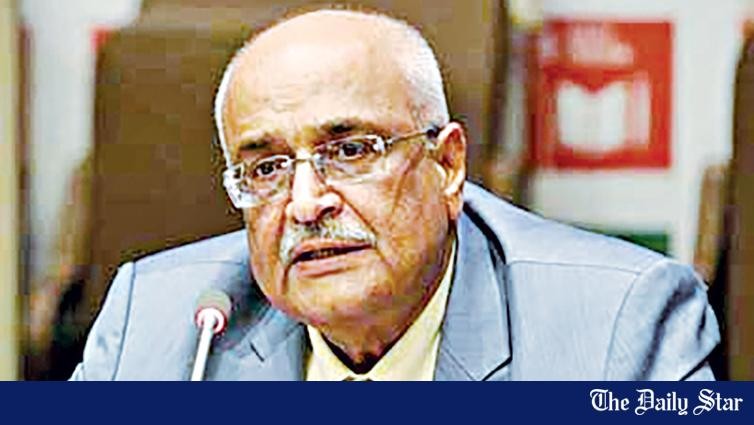
Economist Debapriya Bhattacharya stated that the government should consider suspending mega projects whose physical work has yet to begin, given the current economic situation. Unless these projects are of utmost importance, they should be put on hold, he noted at a virtual dialogue titled Top 20 Mega Projects in Bangladesh: Trends and Status.
Bangladesh needs to be wary of its debt situation, which may become tricky as the repayment schedule for many high-value loans kicks off, he explained. There is a need for defining a repayment strategy, including rescheduling of imminent payments, given the current account and foreign reserve status, with very close monitoring being paramount.
Debapriya also urged the government to review several projects involving visible corruption. The comments arrive as the country struggles with dwindling foreign currency reserves, runaway inflation, and an energy crisis.
His research team examined the 20 most expensive mega projects, including the Padma Bridge, Padma Bridge Rail Link, Rooppur Nuclear Power Plant, and three metro rail projects. The total implementation cost of these projects is Tk 556,955.74 crore, with 61.17 percent supposed to come from foreign assistance.
Foreign sources are slated to finance over 50 percent of 14 out of the 20 projects, which comprise 11 transportation and communication sector projects, four electricity and fuel sector projects, two education sector projects, two health sector projects, and one housing project. Projects related to electricity and fuel are much larger and more foreign-finance dependent.
Debapriya pointed out that mega projects have seemingly come at the expense of fiscal allocations for social sectors, including health, education, and social protection. Furthermore, lack of transparency, accountability, and implementation delays have negatively affected reserves.
The implementation of these 20 mega projects involves 40 loan packages and five grants. Of the total foreign finance, almost 84.4 percent consists of grants and concessional loans, while two semi-concessional loans are from Russia and five non-concessional loans are from China. Thirteen loan packages amounting to $32.26 billion are due for repayment by 2024, with 57.5 percent carrying a 10-year grace period and 72.5 percent having a repayment period of 20 years or beyond.
Despite these obligations, Debapriya noted that the terms and conditions of the foreign loans are relatively favorable due to a good number of concessional loans and grants. He also welcomed negotiations between the government and the International Monetary Fund, viewing an IMF loan as a positive development that will help stabilize the economic condition and improve investor confidence.
Why it matters
The recommendation highlights critical fiscal and debt management challenges facing Bangladesh as high-value loan repayment schedules approach.