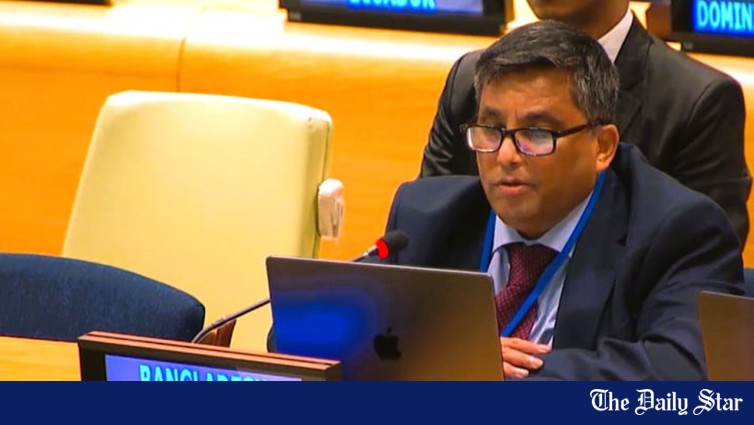
Bangladesh has called for a strong international convention to prevent and punish crimes against humanity, urging special recognition and support for countries hosting victims, according to a press release from its Permanent Mission to the United Nations.
At the Sixth Committee of the 81st session of the United Nations General Assembly in New York, delegate Muhammad Nawshad Zamir outlined three key provisions: cooperation in preserving evidence and protecting witnesses in host countries, support for survivors including access to justice at national and international levels, and international solidarity in sharing the burden borne by host nations.
Zamir highlighted Bangladesh’s experience of sheltering more than one million Rohingya forcibly displaced from Myanmar, arguing that countries hosting victims of atrocities must be included in international accountability mechanisms.
He also referenced Bangladesh’s 2024 uprising, citing a UN report that estimated up to 1,400 people were killed, and called for investigations into possible crimes against humanity.
The proposal calls for universal jurisdiction, stronger extradition mechanisms and an end to impunity, stressing that the new convention should complement the Rome Statute while safeguarding the International Criminal Court’s independence.
“A convention diluted until it offends no one will protect no one,” Zamir warned, emphasizing the need for robust legal safeguards.
The initiative reflects Bangladesh’s broader diplomatic push to strengthen international legal frameworks and support vulnerable populations affected by mass atrocities.
The UN Sixth Committee will consider the proposal in upcoming sessions, with Bangladesh urging member states to adopt the treaty promptly.
Why it matters
The treaty would strengthen international mechanisms to hold perpetrators accountable and aid countries hosting victims, such as Bangladesh with the Rohingya.