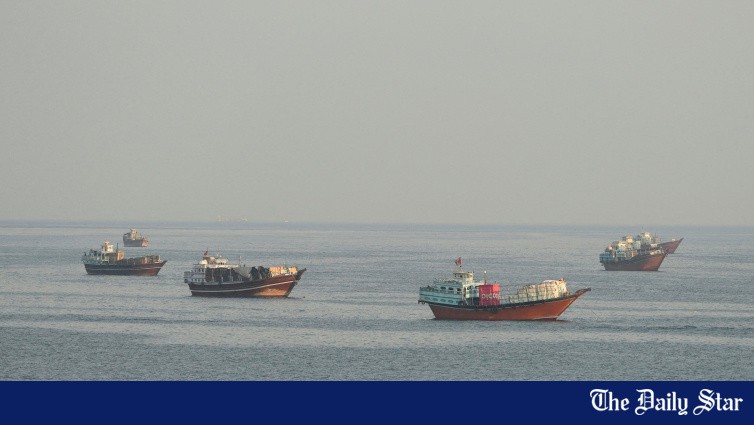
Dhaka must coordinate with Tehran and follow its instructions to ensure the safe passage of Bangladeshi vessels through the Strait of Hormuz, Iranian Ambassador to Bangladesh Jalil Rahimi Jahanabadi said today.
The ambassador explained that no country could safely transport energy supplies through the strategic waterway without close coordination with Iranian authorities.
"To pass through, you have to follow the directions set by Iran," he told reporters at a press conference at the Iranian Embassy in Dhaka.
He added that he was working to ensure the safe passage of energy shipments bound for Bangladesh, underscoring the importance of the route for the country's energy security.
When asked whether any Bangladeshi vessels had already crossed the strait, the ambassador said the information was confidential and available only to the relevant officials.
On the reopening of the waterway, he noted that Iran, Qatar and Oman have plans in hand, but that lifting the U.S. naval blockade against Iran and securing a commitment against further attacks are key conditions.
The ambassador also said Iran would support Rohingya Muslims if they took a stand against the United States and Israel.
Expressing scepticism about the prospects for negotiations with Washington, he predicted a third round of war and warned that Iran would respond proportionately to any nuclear attack.
These remarks highlight Bangladesh's reliance on regional maritime routes for energy imports and the diplomatic balancing act the country faces amid heightened geopolitical tensions.
Why it matters
Ensuring safe passage through Hormuz is vital for Bangladesh’s energy security and trade continuity.