At the upcoming COP31 climate summit, Bangladesh will push for increased grant-based climate finance, stronger global commitments regarding adaptation, and greater accountability from major polluters. The nation is seeking international support to address worsening climate impacts without adding to its debt burden.
Prime Minister Tarique Rahman is scheduled to attend the two-day World Leaders’ Summit on November 11–12, where he is expected to present Bangladesh’s priorities on climate justice, international financial commitments, and support for implementing national climate plans.
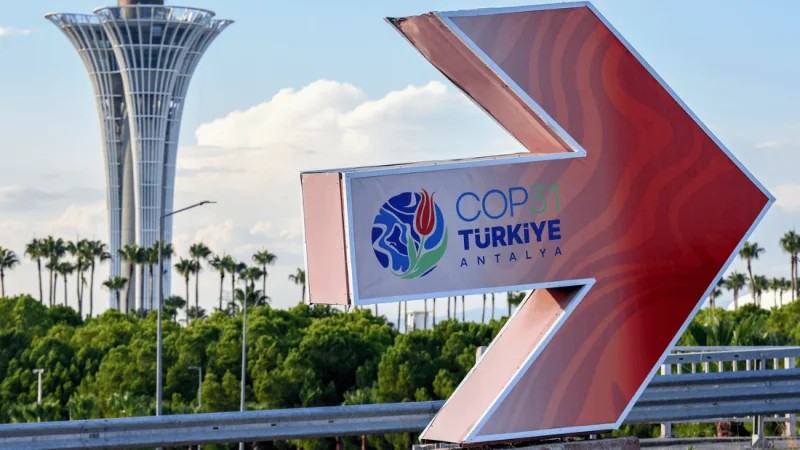
The 31st Conference of the Parties to the United Nations Framework Convention on Climate Change (UNFCCC) is scheduled to be held in Antalya, Türkiye, from November 9 to 20. The event is expected to bring together world leaders, climate negotiators, development partners, civil society representatives, and international organizations.
Bangladesh’s central message is that countries bearing the greatest climate risks, despite contributing relatively little to global emissions, should not have to take on more debt to protect their people.
Environment, Forest and Climate Change Minister Abdul Awal Mintoo outlined the country’s negotiating priorities at a press conference held at the Secretariat in Dhaka on Thursday.
Also present were Special Assistant to the Prime Minister for Environment and Climate Change Dr Saimum Parvez, Acting Secretary of the Ministry of Environment, Forest and Climate Change Dr Fahmida Khanam, Additional Secretary Navid Saifullah, and Bangladesh Climate Change Trust Managing Director Kazi Rawnaqul Islam.
Mintoo stated that Bangladesh would prioritize climate justice, the protection of vulnerable communities, and international financial and technological support to implement its climate commitments. He also emphasized the necessity for adequate, predictable, and accessible climate finance—primarily through grants—alongside enhanced support for adaptation and addressing loss and damage.
On Monday, State Minister for Foreign Affairs Shama Obaed Islam stated that Bangladesh will urge developed countries to provide climate finance as grants rather than loans and to assume responsibility for their contribution to global carbon emissions. Her remarks reinforce Dhaka’s position that climate finance should reflect the historical responsibility of major emitters alongside the financial needs of vulnerable developing nations.
Bangladesh has prepared a national position paper through consultations with relevant ministries, government agencies, and climate experts. The country will also coordinate its negotiating position with the Least Developed Countries Group, the Group of 77 and China, and other climate-vulnerable nations.
Climate finance is expected to be one of Bangladesh’s principal priorities at COP31, with Dhaka seeking stronger implementation of commitments made by developed countries under international climate agreements. The country will call for new, additional, predictable and accessible resources to support adaptation, resilience-building and the implementation of national climate plans.
A key demand will be that assistance for climate-vulnerable developing countries should come primarily through grants instead of loans. Bangladesh argues that loan-based climate assistance can increase public debt and place an additional financial burden on countries already dealing with the economic consequences of climate change.
The government will also press for simpler application and approval procedures for international climate funds. Bangladesh maintains that lengthy processes and complex administrative requirements can prevent resources from reaching communities when they are most urgently needed.
The issue holds broader significance for developing countries as they work to bridge the gap between the scale of climate action required and the financial support currently available.
Earlier, at COP29 in Baku, countries agreed that developed nations would take the lead in mobilizing at least $300 billion annually for developing countries by 2035, within a broader effort to scale up climate finance from all sources to $1.3 trillion a year by the same deadline. For Bangladesh and other vulnerable nations, the challenge is to ensure that such commitments translate into accessible funding, particularly for adaptation and loss and damage.
Bangladesh will seek greater accessibility and effectiveness of the Fund for Responding to Loss and Damage, which was established to assist developing countries particularly vulnerable to the adverse effects of climate change. Dhaka will advocate for faster disbursement, simplified funding procedures, and stronger support for communities facing irreversible climate impacts.
The country will also elevate the importance of addressing non-economic losses, which include displacement, the disruption of traditional livelihoods, and damage to cultural heritage and community identity. These concerns are particularly pressing for coastal and riverine communities in Bangladesh, where erosion, salinity intrusion, cyclones, and other extreme weather events threaten homes, livelihoods, and habitable land.
The government maintains that international support must address the actual needs of affected populations rather than staying limited to financial pledges that remain difficult to access. Consequently, Bangladesh will pursue arrangements that enable vulnerable nations to respond to climate-related disasters while simultaneously investing in long-term resilience.
Bangladesh will call on countries to accelerate science-based greenhouse gas emission reductions in line with the Paris Agreement’s goal of limiting global warming to 1.5 degrees Celsius above pre-industrial levels.
Dhaka will urge developed countries to demonstrate leadership in cutting emissions and call on major emitting economies to strengthen their climate commitments in line with their responsibilities and respective capabilities.
It will also emphasize that developing nations require finance, technology transfer, and capacity-building support in order to implement their nationally determined contributions, known as NDCs.
For Bangladesh, stronger global mitigation is essential because adaptation alone cannot eliminate the growing risks associated with continued warming. The government will argue that the countries with the greatest historical responsibility and financial capacity must take the lead in reducing emissions while supporting vulnerable nations to pursue climate-resilient development.
Implementation of Bangladesh’s National Adaptation Plan (NAP) will be another major focus of the negotiations. The government will seek financial and technological assistance to strengthen resilience in coastal areas, wetlands, river islands and drought-prone regions.
Priority areas include water security, food production, public health, disaster preparedness and the protection of climate-sensitive livelihoods. Bangladesh will also highlight the importance of early warning systems, climate-resilient infrastructure and locally led adaptation initiatives.
Coastal communities facing cyclones and salinity intrusion, farmers affected by irregular rainfall and drought, and riverine populations confronting erosion and displacement are among those requiring stronger support. Dhaka will press for adaptation finance that reaches local communities and supports solutions shaped by their needs, traditional knowledge and direct experience of climate impacts.
Bangladesh will seek international cooperation to support a just and equitable transition towards low-carbon development across the energy, agriculture, industrial and transport sectors.
The government will emphasize that the costs and benefits of the transition must be distributed fairly, with particular attention to workers, low-income communities, women and young people. Skills development, social protection, labor rights and decent employment opportunities will be important elements of the country’s just transition agenda.
Dhaka will also advocate affordable access to renewable energy technologies, energy-efficient systems, cleaner industrial production and sustainable transport. Its position is that developing economies need international finance and technology to pursue cleaner growth without undermining employment, economic competitiveness or social development.
Bangladesh will explore opportunities to mobilize additional finance and technological support through international carbon markets under Article 6 of the Paris Agreement. The mechanism allows countries to cooperate in meeting their climate commitments, including through internationally transferred emission reductions and other forms of cooperation.
Dhaka considers carbon markets a potential supplementary source of finance for implementing its NDCs and supporting low-carbon development. However, the government will maintain that carbon market cooperation cannot replace predictable public climate finance, particularly for adaptation and loss and damage.
Bangladesh will also seek stronger international cooperation on affordable climate technologies, technical expertise and institutional capacity-building. Such support will be important for renewable energy, climate-resilient agriculture, industrial decarbonization, water management and disaster preparedness.
The country will advocate greater international support for conserving forests, mangroves, wetlands and biodiversity as part of its wider climate response. Nature-based solutions can strengthen ecosystem resilience while supporting local livelihoods and sustainable resource management. They are particularly relevant to Bangladesh, where mangrove forests, wetlands and river systems provide protection against climate hazards and support millions of people.
Bangladesh will also emphasize inclusive climate governance and meaningful participation by women, children, young people, persons with disabilities and marginalized communities. The government will seek improved access to climate finance for women-led and locally led initiatives, arguing that climate policies must reflect the needs and experiences of vulnerable populations.
Bangladesh is also expected to raise concerns about climate-related international trade measures that could affect the exports, employment and competitiveness of developing economies.
Dhaka will seek cooperation to ensure that environmental trade policies do not place disproportionate burdens on countries with limited financial and technological capacity. The government will advocate assistance to help industries adopt cleaner technologies, improve energy efficiency and meet evolving international environmental standards.
Its position will be that the shift towards sustainable production should be supported through finance, technology transfer and capacity-building rather than measures that could undermine development opportunities. For Bangladesh, the challenge is to balance global climate objectives with economic growth, employment generation and poverty reduction.
Bangladesh will establish a 100-square-metre pavilion at the COP31 conference venue to showcase its climate vulnerabilities, adaptation experience and national priorities.
The pavilion will feature the country’s updated nationally determined contribution, known as NDC 3.0, alongside its National Adaptation Plan and initiatives addressing climate-induced loss and damage. Other areas of focus will include climate finance, renewable energy, carbon markets, nature-based solutions and technological innovations supporting climate resilience.
The pavilion is expected to serve as a platform for knowledge exchange, policy discussions, and engagement with research institutions, potential investors, and international development partners.
Additionally, Bangladesh intends to showcase community experiences and locally developed adaptation solutions to demonstrate how people directly affected by climate change are responding to its impacts.
The government hopes the pavilion will help create opportunities for partnerships, technical cooperation and investment aligned with national climate priorities.
Bangladesh’s negotiating position will be guided by equity and the principle of common but differentiated responsibilities and respective capabilities, a foundation of international climate cooperation. The principle recognizes that all countries have a role in addressing climate change, but their responsibilities and capacity to act differ according to historical circumstances and national capabilities.
Dhaka will argue that developed countries must fulfil their international commitments while providing vulnerable developing nations with the resources needed to implement climate action. The position also reflects a broader demand for accountability from major polluters, particularly as countries facing severe climate impacts struggle to finance adaptation and recovery.
For Bangladesh, climate justice is not limited to securing financial pledges. It also means ensuring that international support is accessible, reaches affected communities and reflects the scale of the damage they face.
COP31 comes at a critical point for international climate cooperation, with countries under growing pressure to turn existing commitments into measurable action.
Türkiye will host the conference, while Australia will chair the negotiations under the agreed organizational arrangement. Discussions are expected to focus on implementing the Paris Agreement, strengthening adaptation, mobilizing climate finance and supporting a fair transition towards cleaner energy systems.
With Prime Minister Tarique Rahman preparing to present the country’s position at the World Leaders’ Summit on November 11–12, Dhaka will seek to put grant-based finance, climate justice and the protection of vulnerable communities at the center of the discussions.
The success of COP31, from Bangladesh’s perspective, will ultimately depend not simply on new declarations but on whether international commitments deliver practical support to countries and communities already living with the consequences of climate change.
Why it matters
Bangladesh's active participation and demands at COP31 directly shape international climate finance structures and adaptation support mechanisms for vulnerable developing nations.