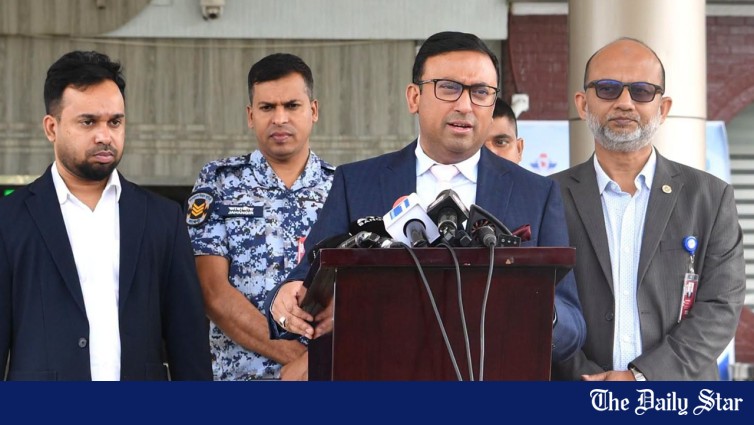
State Minister for Foreign Affairs Humaiun Kobir on Saturday ruled out issuing a passport or travel document to ousted former Prime Minister Sheikh Hasina, saying Bangladesh will instead seek her extradition from India under the existing treaty.
He explained that the extradition treaty already provides a legal mechanism for returning individuals accused of terrorism or serious crimes, and that a passport is unnecessary for that process.
Kobir made the comments after seeing off a visiting Chinese delegation led by Liu Haixing, minister of the International Department of the Communist Party of China, at Hazrat Shahjalal International Airport.
The minister reiterated that a judicial warrant and established judicial process are in place, emphasizing that “there is a judicial warrant, there is an established judicial process, and there is an extradition treaty.”
He also accused Hasina of being responsible for the deaths of thousands of people before she fled the country, reinforcing the government’s stance that she is a fugitive.
Turning to economic matters, Kobir said Bangladesh is interested in the proposed Bangladesh‑China‑Myanmar economic corridor, describing its potential to transform the region into a major trade and connectivity hub, but stressed that a sustainable solution to the Rohingya crisis must come first.
He expressed optimism that Liu Haixing’s visit would further strengthen political, economic and strategic cooperation between Bangladesh and China, noting that the high‑level engagement could inject fresh momentum into the longstanding bilateral partnership.
The minister concluded by affirming Bangladesh’s commitment to pursue Hasina’s formal handover through diplomatic channels with India, while continuing to deepen ties with China on trade and infrastructure projects.
Why it matters
The decision signals Bangladesh’s firm legal stance on a former leader while highlighting deepening ties with China, affecting regional diplomatic and economic dynamics.