Bangladesh has formed a new wage board to review the minimum wage for garment workers as it tries to quell a protest movement that has disrupted key industrial hubs.
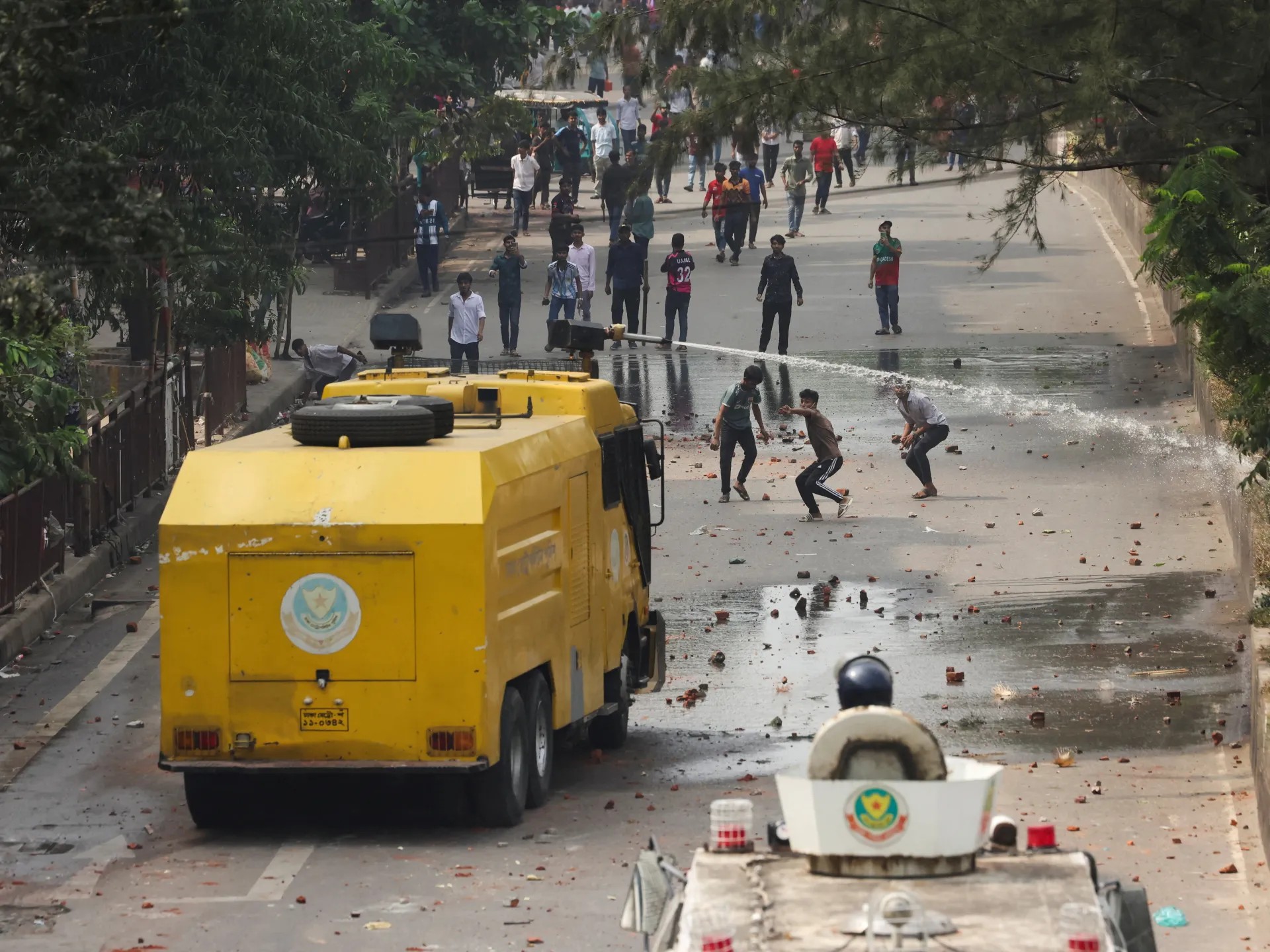
Despite the announcement on Sunday, thousands of workers demanding higher wages continued protesting around the capital, Dhaka. Clashes were reported with police, who fired tear gas and sound grenades.
The garment sector is the backbone of Bangladesh’s export-driven economy, employing millions of workers and generating the bulk of the country’s foreign earnings. Workers are demanding a minimum monthly wage of 30,000 taka ($242), more than double the current wage of 12,500 taka ($101), citing soaring costs for food, housing, transport, and healthcare.
The newly formed six-member board includes representatives of the government, workers, and factory owners, tasked with determining a revised minimum wage structure.
Ministry of Labour and Employment adviser M Sakhawat Hossain Chowdhury told reporters that the issue of forming the board has been resolved and urged workers to return to their duties smoothly. Meanwhile, Labour and Employment Minister Ariful Haque Chowdhury warned that prolonged closures could delay export shipments and international payments.
The protests began on Saturday, leading roughly 30 garment factories on the outskirts of Dhaka to declare temporary holidays according to Ashulia Industrial Police superintendent Mohammad Mominul Islam Bhuiyan. Clashes in Ashulia left several individuals, including police officers, injured.
Accounting for roughly 10 percent of gross domestic product, Bangladesh's garment industry is the world's largest after China's. However, manufacturers highlight ongoing challenges, including rising production costs, energy shortages, and uncertainty linked to Middle East tensions.
Why it matters
The formation of a new wage board directly impacts labor stability and export performance in Bangladesh's critical garment manufacturing sector.